Leave a comment

42 Seconds Bible Study

By Justin Rossow

Often, but not always, our Sunday morning bible class shares the same theme as the Sunday sermon. I like to teach and preach on the same content for several reasons. First, it helps the hearers encounter the primary message of the day in multiple formats. Second, it allows people to process out loud what they have heard. Finally, it also gives me a way to use the stuff I had to cut from my sermon or only mention in passing. The first two are about pedagogy; the third simply helps me deal with the heartache of editing down my sermons …

Our 42 Seconds Series followed that same pattern. I preached four sermons based on the four sections of the book by Carl Medearis. Then, in bible class, I expanded the content of the sermon and broadened the scope of the discussion. You can download the master copy of the handouts I used and adapt them for your own congregational use:

Download the 42 Seconds Bible Class Master

There are 5 handouts for a 4-week series. Math has never been my best subject. In this case, the first class is intended as an introduction. We handed out the book in worship for a few weeks, then pointed people to an intro bible class where we got to know each other and laid a foundation, then we walked week by week with the sermon series.

If you are thinking about using this material in your ministry setting, here are a few other things you might want to know:

It’s Pretty Lutheran

If you’re in a Lutheran context, you’re going to recognize a bunch of the names on the book list. People like John Kleinig, Dietrich Bonhoeffer, and Martin Luther are pretty darn Lutheran! There’s even a few places where some technical Lutheran jargon creeps in to the teaching (on purpose) like when I am talking about Jesus as an example and relate that to the Third Use of the Law.

On the other hand, people like Mike Breen, Brene Brown, and Carl Medearis are pretty much NOT Lutheran. So depending on your context, this stuff might be way too Lutheran for you, or not nearly Lutheran enough.

Know this: I am trying to get people within my tribe to hear something really important from a guy who is not inside my tribe. That can be a tricky dance. Fundamentally, I believe what Carl is writing in 42 Seconds aligns well with Lutheran theology, piety, and mission. Since the content of the bible study supports and extends the teaching of the book, I actually hope you like both, no matter what tribe you are from!

It’s Calibrated to St. Luke–Ann Arbor

At my local congregation, we have chosen four values that help us express the kind of church we are trying to be. At St. Luke we value Openness to people and expression, Faithfulness to complex truth, Connection through authentic relationships, and Dependence on Jesus. Those values find an echo in the four sections of the book: Be Kind (Openness), Be Present (Connection), Be Brave (Faithfulness), and Be Jesus (Dependence). In fact, that’s a main reason I wanted to preach and teach this series in the first place!

So you’ll notice St. Luke language cropping up occasionally. Feel free to cut it, adopt it, or modify it for your context.

We’ve also identified three growth areas: My Church Home, My Discipling Relationships, and My Everyday Communities. Again, take it or leave it. Just recognize that in some ways all theology gets done at the local level. If you wouldn’t say it like we do, how would you say it? Can you say it consistently? Can others say it that way, too?

This study is calibrated to fit the way we talk at St. Luke. I don’t think the language is so unique or pervasive that you can’t use this content for your context. But if the language does sound off here or there, take the opportunity to wonder how you say things around your place, and what your local way of talking means for your values and mission.

Presentation and Conversation are Equally Mixed

I actually do appreciate a lecture format bible class once in awhile. And I kind of love a rambling, verse-by-verse, dig deep and ask lots of questions study. This isn’t either of those.

On any given Sunday, we’ll have between 80 and 120 adults seated at tables of 6-8. I encourage them to sit at the same table for the whole five weeks, and someone at every table always volunteers to bring breakfast goodies to share. (And a few tables always forgets, and several tables always have way too much, and it somehow gets sorted in the end.)

The point of this organization is to create space for conversation. We learn differently if we engage verbally. So you will find an opening discussion time in each of the weekly studies. After people have had a chance to connect, I then present new content for a chunk of 15-20 minutes. Then I ask them to discuss something a little deeper at their tables, and I actually give them time to process together. That’s one reason to limit the table size to no more than 9: get too big and not everyone can share in the time allotted. After that discussion, I present again, and then usually leave them with more time to talk at the end.

I often field questions, but not too many, because the focus is on the relational learning at the tables. Mostly, the rhythm is: talk, present, talk, present, talk. And if that feels weighted on the talk side of the scale, I know I have them as a captive audience for the sermon in worship!

The Bible Class Doesn’t Stand Alone

This set of 5 hour-long bible studies is designed to go along with a 4-part sermon series. It works best if people are actually reading along in the 42 Seconds book. And we also provided weekly Taking Worship Home resources that our people use in small groups or in their families. You can find all of these resources on the justinrossow.com 42 Seconds Resource Page.

Not everyone will resonate with all of these options. But the more possibilities they have to engage this content, the more opportunity they will have to receive what Jesus wants to give them, and to be shaped the way he intends. Good luck, and let me know how it goes!

Bibliography

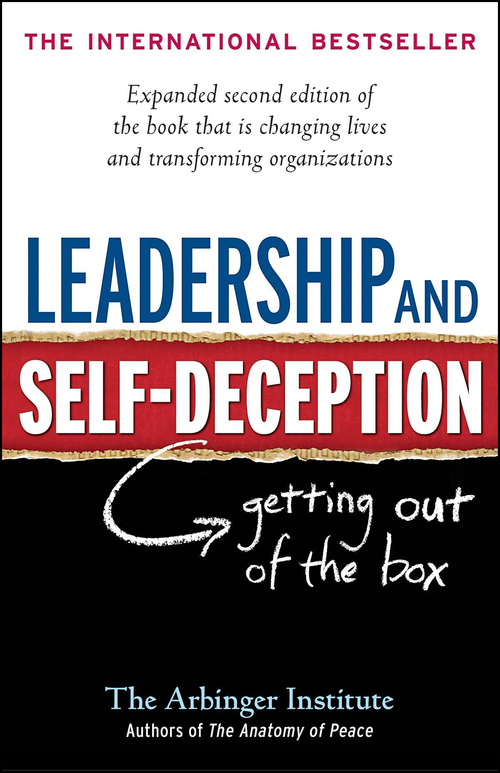
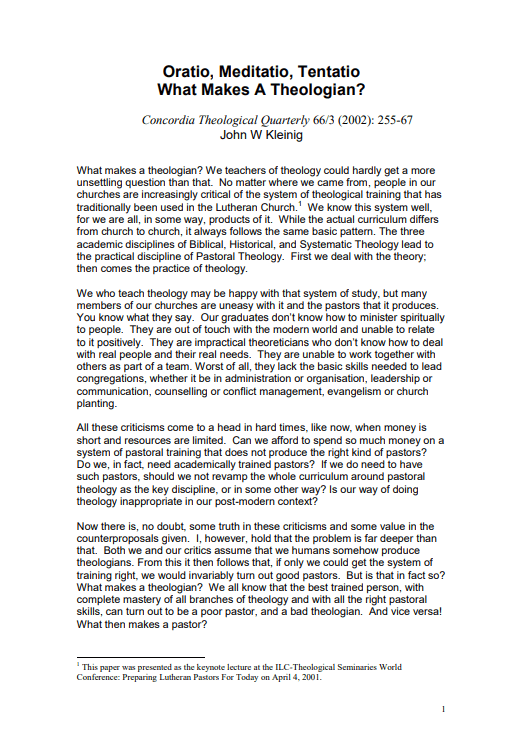
Whether you use the bible class handouts provided or not, you mind find a helpful addition to your library in the bibliography, below. Sources listed in order of appearance.

42Seconds-cover-w250 leadership-and-Self-Deception1
 Life Together  One anothering  Breen
 Lost Everts  StTiL_cover_3D  Kleinig CTQ
 MotW B  Sw2P


1 Comment

Be Brave: 42 Seconds Sermon Notes 3 of 4

42 Week 3Editor’s Note: This resource supports preachers and congregations in the use of the book 42 Seconds: The Jesus Model for Everyday Interactions by Carl Medearis. You can visit the 42 Seconds Resource page at justinrossow.com to see more. 


The Big Idea

Fear of giving or taking offense can keep us from engaging others whose first barrier to knowing and trusting Jesus may be knowing and trusting a Christian. Jesus uses us and rescues us as he brings OUR story, THEIR story, and HIS story into an intersection of grace.

The Goal

That the hearers hold their story, the story of people in the culture around them, and the story of Jesus together in order to see Jesus at work in grace.

The Big Problem

We live in a culture of distrust. Christians naturally avoid people who don’t trust Christians, or go on the offensive and attack them. For their part, people who grow up in that kind of culture won’t tend to get to know and trust Jesus until they have gotten to know and trust a Christian.

The Big Promise

Jesus restores you and releases you from the burden of having to get it right so people around you can be saved. Instead, Jesus saves you and then uses your story where in intersects with their story to bring his saving story into their lives and yours.

Quotable Quotes

“To speak out at a heart that genuinely cares. And then trust God to take care of the rest” (103).

Readings for Worship

1 Chronicles 11:12-14: Taking a stand in a barley field.

Philippians 4:4-9: “Let your gentleness be evident to all.”

Matthew 28:16-20: “As you go, disciple the nations … and I am with you.”

Sermon: Definition

I originally conceived of the Be Brave sermon as a Paradox Maintained structure: in order to follow Jesus, you need to hold on to both truth and people at the same time. But the more I worked with it, the more I wanted to hold three things together: YOUR story, THEIR story, and the story of Jesus.

Viewing the topic as an intersection of three storylines rather than a tension between two sides of a paradox led to a different kind of sermon. Here I am trying to define what it means to live out the Great Commission; that definition has three distinct but overlapping components.

The thought flow is not Paradox Maintained (hold on to A and B without letting go of either), nor is it Process (you experience A, that leads to B, that leads to C); rather, the logic is that of Definition (to grasp X you need to know A, and B, and C, and understand how they fit together). For more on Definition as a sermon structure, visit: https://concordiatheology.org/sermon-structs/thematic/definition/.

Sermon Outline


You live out the Great Commission at the gracious intersection of
A. Your Story: “As you go…”

  1. In a Culture of Distrust, the natural response to a fear of vulnerability is to attack.
  2. The natural response to relational fear is to avoid any controversial topic altogether.

B. Their Story: “… disciple the nations …”

  1. The first threshold people have to cross today on their path to Jesus is simply trusting a Christian.
  2. True bravery means serving people who naturally distrust you.

C. The Story of Jesus: “…and I am with you always.”

  1. For Jesus, bravery meant the opposite of ego.
  2. Jesus uses your story and where it intersects with their story to bring his saving story to you both.

Prayer for the Week

Risen and ascended Lord, since you chose to enlist me in your mission,
be faithful to your promise to be with me always.

Where my story intersects the story of another, let your story be present, too.
When I encounter distrust from others, teach me to put my trust in you.
As I strive for faithfulness, give me the gift of true bravery and bold love.

In every situation, give me wisdom to be silent; give me courage to speak; and give me genuine compassion for others, both in my silence and in my speech.

As the challenge of living daily as your follower increases, continue to invite me into deeper relationship with you. And to your name be the glory. Amen.

The Sermon

The full manuscript is available here, or you can watch the sermon, below.

1 Comment

Sermon 4: Be Jesus

Sermon 4 of 4: Be Jesus, by Justin Rossow (Comparison/Contrast Structure)

The sermon notes for this manuscript can be found here.

Introduction

“Jesus must be cheating.”

I know—that doesn’t sound very pious. But I think that, whether we are consciously aware of it or not, our typical response to any suggestion that we emulate Jesus, or imitate Jesus, or be conformed to the image of Jesus for the sake of others—any time we are invited to “be Jesus,” I think that we think: “Jesus must be cheating.”

I mean, Jesus is so loving, he is so kind, he is so powerful yet humble. Of course he is going to resist temptation! Of course he’s going to lay down his life for his friends! Of course Jesus can do all kinds of miraculous signs of the Kingdom, and love his enemies, and save the world: he’s God, for crying out loud!

So when I am asked to do any of the things Jesus did, when I am called on to resist temptation, or to love my enemies, or humbly engage in the powerful work of the Kingdom, my first reaction is to let myself off the hook by seeing the God/Man Jesus and saying, “Of course Jesus can do that! He’s God. And I’m not.”

In other words, Jesus must be cheating: sneaking in a little divine power to resist the devil; pulling off a second-person-of-the-Trinity magic trick to point to the Kingdom; playing his God-in-the-flesh card whenever the going got too tough for his flesh.

So when Carl Medearis or anybody else invites me to “be Jesus,” I take that invitation with a grain of salt. I mean, I can be maybe a little bit like Jesus once in a while, but he’s God, and if I’m honest, I kind of think that gets me off the hook.

The only problem with downplaying Carl’s invitation to “be Jesus” is that Jesus makes much the same invitation: “As the Father has sent me, I am sending you.” “As I have loved you, so you must love one another.” “Very truly I tell you, whoever believes in me will do the works I have been doing, and they will do even greater things than these…”

If JESUS thinks I should be like Jesus, then maybe I need to reconsider who exactly this Jesus is, and how exactly I am supposed to be like him.

A. Jesus receives the Spirit (and so do I)

One of the defining features about Jesus is that he is the Messiah, the Christ. That title—Messiah in Hebrew, Christ in Greek—simply means “The Anointed One.” Jesus is the promised Anointed One, the special representative of Yahweh who would receive and bear the very Spirit of God.

I like this [Image of the Baptism of Jesus][1] because it captures the descent of the Holy Spirit. Remember, when Jesus was anointed at his baptism, he was named the beloved Son of God, and the Spirit descended on him like a dove. Jesus came to the waters where people were being baptized for repentance. Jesus stood in the place of sinners to fulfill all righteousness. And Jesus was declared the unique and beloved Son, who received the Holy Spirit and lived out the rest of his ministry carrying the special presence of that Spirit.

So in the one sense, you are not like Jesus at all. He is the unique Christ of God, the anointed Messiah, God’s one and only Son. But it another sense, precisely because Jesus stood in the place of sinners—because Jesus took your place, Jesus invites you to take his place. Because Jesus received and carried the Holy Spirit in a unique way, he became the one who was authorized to pour out the Spirit on all people, universally.

That’s what’s going on at Pentecost: Jesus himself, the Anointed One, the Anointed-with-the-Spirit One, is pouring out his Spirit on his followers. I love this baptism image because it could be the baptism of Jesus, with the descent of the Holy Spirit like a dove, or it could be Pentecost, with tongues of red fire dancing in the blowing of the Spirit wind.

It looks as if this person is almost inhaling, or drinking deeply of the Spirit. It reminds me of what Paul would later write: “For in one Spirit we were all baptized into one body—whether Jews or Gentiles, slave or free—and we were all given the one Spirit to drink.”[2]

So although Jesus was uniquely baptized as the unique Son of God who uniquely bears the Spirit, you have now also been baptized. You have been named beloved daughter, beloved son. The same Holy Spirit that filled Jesus at his baptism now fills you. Today is Pentecost renewed again; every day, you walk in the power of your baptism; every breath, you breathe the wind and Spirit of God; every moment you drink in life, you drink of the one Spirit that empowered the life of Jesus the Messiah.

This painting by Lance Brown is simply titled, “Come, Holy Spirit.” It could be a picture of Jesus at his baptism; it could be a picture of the disciples at Pentecost; it could be a picture or you, today.

Jesus was anointed with the power of the Spirit. And so are you.

[Return to Background Image]

B. Driven by the Spirit, Jesus brings the Kingdom in intimate dependence on the Father (and so do I)

You know what happens right after Jesus’ baptism, right? The Spirit drives Jesus out into the wilderness to be tempted by the devil.[3] That’s right. The Spirit is now in charge. So that when Jesus faces temptation, he isn’t fighting with his power as God. Jesus resists temptation the same way you and I are supposed to: Jesus resists temptation as a human being who is filled with the Holy Spirit.

In fact, everything that Jesus does to bring the Kingdom reign of God from that point forward is done in the power of the Holy Spirit and under the authority of the Father.

After the temptation, Luke writes: “Jesus returned in the power of the Spirit to Galilee, … he taught in their synagogues … [Jesus] unrolled the scroll [of the prophet Isaiah] and found the place where it was written,

“The Spirit of the Lord is upon me,
because he has anointed me
to proclaim good news to the poor.”[4]

And he says, “That was written about me!”

Jesus does what he does only in the power of the Spirit. And time and time again Jesus speaks of his dependence on the Father. “I do nothing on my own authority,” Jesus said, “but I speak just as the Father taught me. And he who sent me is with me. He has not left me alone.”[5] Or again: “The words I say to you I do not speak on my own authority. Rather, it is the Father, living in me, who is doing his work.”[6]

Whatever Jesus is doing to bring the Kingdom, from his most miraculous sign to his most humble service, Jesus always is working in the power of the Spirit and under the authority of the Father.

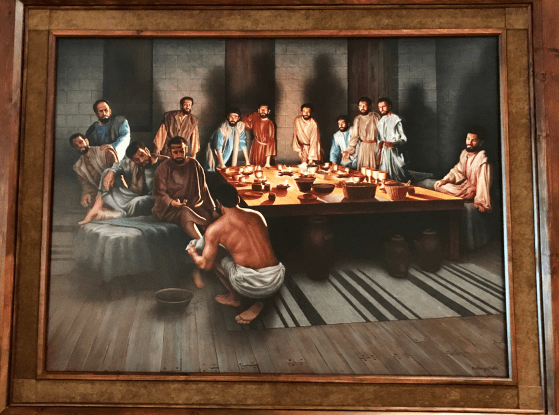
One of my favorite examples of this kind of humble and dependent service is the foot washing in the Upper Room. [Footwashing Image] John tells us: “Jesus knew that the Father had put all things under his power, and that he had come from God and was returning to God; so he got up from the meal, took off his outer clothing, and wrapped a towel around his waist.”[7]

Foot WashingBecause Jesus was confident of his relationship with God the Father, because Jesus knew his future as the Anointed-with-the-Spirit One, Jesus was able to serve. Jesus serves in the power of the Spirit and under the authority of the Father.

In that same Upper Room, while the disciples’ toes were still squeaky clean, Jesus will promise his followers that same Spirit, and invite us into that same intimate dependence on the Father: “I will ask the Father, and he will give you another advocate to help you and be with you forever—the Spirit of truth…  On that day you will realize that I am in my Father, and you are in me, and I am in you.”[8]

So Carl can write: Jesus “actually invites us to the same kind of deep connected knowing of himself as he had with his father.”[9] Isn’t that amazing? The intimate knowing that exists within the Trinity from eternity is open and available to you, a sinful human being, because you also bear the Holy Spirit and live under the authority of the Father, all for the sake of Jesus.

No, you are not an eternal part of the eternal God the same way Jesus is. And, as a human being, Jesus lived out his own life in dependence on the Spirit and under the authority of the Father. When Carl asks you to Be Jesus, he doesn’t want you to imagine you are divine; quite the contrary. If we want to Be Jesus, Carl says, “We will follow [Jesus] right into the humility of dependence.”[10]

[Return to Background Image]

C. Jesus lives the human life the way God intended humans to live (and so do I, except …)

When I think of Jesus using his divine power to fight temptation, or perform signs of the Kingdom, or even to submit himself to the Father’s will, it seems, just a little, like Jesus is cheating.

But what if Jesus isn’t living as God among humans? What is Jesus is living as a human, the way God intended humans to live? That might actually be a more faithful representation of the biblical witness.

I mean, I know Jesus is God; you know Jesus is God; Jesus knows he is eternal God from eternity. But when the second person of the Trinity walks among us, he walks and talks and struggles and suffers and loves and grieves and bleeds as a human among humans, as a human the way God intended them to be.

So when we see Jesus interacting with the woman at the well [Jesus with the Samaritan Woman at the Well Image][11] we see one real human being from one human culture interacting with another human being from a similar but very different human culture.

Woman at the Well

I love this version of the Woman at the Well. It comes from the “Jesus Mafa project.” The Mafa villages in Cameroon, Africa sat with the biblical text, and acted out what they heard. That interaction with God’s Word led to a series of paintings from the life of Christ, as if Jesus had come into a Mafa village in Cameroon.

That whole project contextualizes the Gospel in the culture of people for whom Christ died. In fact, while Jesus came in, with, and under a very specific human culture at a very specific time and place, his promise is intended to cross all cultural barriers.

So to the Samaritan woman at the well, outcast from her own culture, this Jewish Jesus from a very different culture speaks of living water that he will pour out on all people. He speaks of drinking in and being filled with the Spirit and being sought by the Father. This Jesus, as a human being, crosses human divides in order to bring human beings into contact with the Father and the Spirit.

And so do you.

As a follower of Jesus, your job description is to receive and carry the same Spirit Jesus received and carried; your job description is to live the same kind of human life and cross the same kind of human barriers that he crossed; your job description is to bring other human beings into the intimate relationship with the Father and the Spirit that Jesus makes possible for you.

D. Jesus is the sinless atonement for all sin (and I need that)

And you know you don’t do that well. You know you fail miserably at that job description more often than not. You know your life is so full of darkness and pain that you despair of ever reflecting even remotely the beauty of Jesus to the world.

And so you hear the invitation to be like Jesus, even to “be Jesus” to the people around you, and you see a perfect Jesus who has all the power of the Godhead behind him and you think, “It’s easy for him! He’s God! But I’m not brave or powerful or holy or perfect like that. Why even try?”

And you are right, at least in this regard. There is something Jesus is that you are not, and that you never could be. [Crucifixion Image][12]

St. Charles Bridge CrucifixThis statue of the crucifixion stands on the St. Charles Bridge in the city of Prague. The Latin letters above his head, INRI, stand for Jesus of Nazareth, King of the Jews. The Hebrew letters emblazoned in gold surrounding this crucified king read: Holy, holy, holy is Yahweh of Armies.

This Jesus, true God, begotten of the Father from all eternity, is also true man, born of the Virgin Mary. This is Jesus of Nazareth, the Jewish carpenter’s son; this is Jesus, the Anointed One of God, Yahweh in the flesh.

Jesus was a human being, like us in every way, except for the fact that he had no sin; instead, he took the sin of humanity onto himself, and did what only the God/Man could do. The one who bore the Spirit of God, lifted up and bore the sins of the whole world all the way to the cross.

You don’t carry, you don’t bear the burden of your sin any longer; that is not in your job description. You do not carry your sin; you do not carry your shame; you are not the one who bears the weight and the burden of your sin. That’s the job description of the Lamb of God, who takes up and carries away the sin of the world.

Jesus took your sin to the cross and became the once-for-all, completely unique, never-to-be-repeated sacrifice that removed all sin. The one and only place where Jesus was not like you—sin—is the one place where you are not supposed to ever be like him—the one who bears the weight of sin and pays its price.

And yet… and yet this same Jesus, who lived his human life filled with the Spirit and in dependence on the Father, also told his friends: “Anyone who would come after me, must deny themselves, pick up their cross daily, and follow me.” Even though you cannot bear your sin, to follow Jesus is to bear your cross.

[Return to the baptism image]


Conclusion: Jesus is absolutely unique and, in the power of the Spirit, you are absolutely like him.

So Jesus is absolutely unique. And, in the power of the Spirit, you are absolutely like him.

You are not like Jesus in his power; no, you are like Jesus in his weakness.
You are not like Jesus in his omniscience; you are like Jesus in his dependence.
You are not like Jesus in his eternal divinity; you are like Jesus in his intimate relationship with the Father.

You are not like Jesus in his unique calling as Messiah, Anointed One, Son of God, Bearer and Giver of the Spirit; and yet, you are absolutely like him in your unique calling as a baptized child of God, who bearers that same Spirit into the world.

You are not like Jesus in his role as Savior of the World; but you absolutely are like him, for you are sent into the world to carry his message of salvation.

You are not like Jesus in his ultimate authority, seated at the right hand of the Father; but you are, you are, you are like Jesus, for you also have submitted yourself to the authority of his Father and yours.

Filled with the Spirit of Jesus, you are not like Jesus in his miraculous Kingdom signs; no, Jesus himself thinks you will do even greater things than these.

And before you get too carried away, it’s good to remember that you are only like Jesus because of what Jesus has done for you. Therefore, as you go out in his image to be kind, to be present, to be brave—as you go out to “be Jesus” to the people in your life, you keep your focus on his activity, not yours. For at the exact same time you are “being Jesus” to others, Jesus is there, being himself to you.

As Carl put it: “The actual presence of Jesus is in us, which means that we can be the actual presence of Jesus to others.”[13] Filled with the Spirit, “we will follow [Jesus] right into the humility of dependence.”[14] Amen.


Editor’s Note: This resource supports preachers and congregations in the use of the book 42 Seconds: The Jesus Model for Everyday Interactions by Carl Medearis. You can visit the 42 Seconds Resource page at justinrossow.com to see more. 

[1] “Come Holy Spirit,” https://jesuspaintings.deviantart.com/art/Come-holy-spirit-jesus-paintings-624727075  by Lance Brown, https://www.paintedchrist.com/ .

[2] 1 Corinthians 12:13.

[3] Luke 4:1

[4] Luke 4:14-19

[5] John 8:28-29.

[6] John 14:10.

[7] John 13:3-4. The painting is by Harry Antis and hangs in the sanctuary at St. Luke, Ann Arbor.

[8] John 14:16-17a, 20.

[9] 42 Seconds, 124.

[10] 42 Seconds, 137.

[11] Jesus with the Samaritan Woman at the Well, http://diglib.library.vanderbilt.edu/act-imagelink.pl?RC=48282. The Jesus MAFA project includes responses to the Gospels acted out by a Christian community in Cameroon, Africa, with paintings depicting the life of Christ as if it had taken place in a Mafa village.

“In the 1970s Mafa Christians in North Cameroun wanted to have pictures of the Gospel using their own cultural resonances. With the help of French missionaries they acted out the scenes, and sketches of the plays were worked up by French artists and given back to them – and to the world. More than 6 million copies have been distributed to date to 83 countries.” http://globalworship.tumblr.com/post/13908904724/pictures-of-the-nativity-story-in-africa-jesus.

[12] The crucifix on the St. Charles bridge in Prague, Czech Republic. INRI: “Jesus Christ, King of the Jews” Hebrew lettering: “Holy, Holy, Holy YHWH of Hosts” from Isaiah 6.

[13] 42 Seconds, 112.

[14] 42 Seconds, 137.

1 Comment

Sermon 3: Be Brave

Sermon 3 of 4: Be Brave, by Justin Rossow (Definition Structure)

The sermon notes for this manuscript are available here.

Introduction

Grace, mercy, and peace be to you from God, our Father, and our Lord and Savior, Jesus Christ. Amen.

The Great Commission gets lived out at the intersection of three stories.

Jesus says: “As you go,”…
The Great Commission is connected to your story.

Jesus says: “As you go, disciples the nations,” …
The Great Commission is connected to their story. 

Jesus says: “As you go, disciples the nations, … and I am with you always.
The Great Commission is ultimately and irrevocably connected to the story of Jesus.

As Jesus sends you out into your everyday lives with his eyes and with his heart and with his words on your lips—as Jesus enlists you to engage in his ongoing work for the sake of the world—as you encounter people at Kroger, and Chile’s, and Huron High School, people for whom Christ died, the Great Commission gets lived out at the intersection of your story, their story, and the story of Jesus.

Faithfulness to Complex Truth means holding all three of those stories together at the same time.

A. YOUR STORY

“As you go,” Jesus says. As you go about your everyday, ordinary, seemingly inconsequential life, Jesus is using you to disciple the nations. And when your story intersects with the nations, sparks can fly.

Just look at what kind of culture Jesus is sending you into! It wasn’t too long ago that the Christian Worldview was respected, if not assumed. Not so any more.

Listen to how Don Everts and Doug Schaup describe the people they know and the culture around them in their book, I Once Was Lost: What Postmodern Skeptics Taught Us About Their Path to Jesus: [cite page 31]

In another day and age, God, religion and church enjoyed the general respect of the culture. Not today. Religion is suspect, church is weird, and Christians are hypocrites. Distrust has become the norm. People are tired of the “sales tactics” often employed by Christians and are offended by our bait-and-switch attempts at introducing them to Jesus. In the past, the occupation of evangelist was viewed as a respectable profession, even by secular society. Today evangelist has fallen to the very bottom of the pit, among the most distrusted occupations.

When people first find out we are Christians, we often literally see them shift from relaxed to rigid, from warm to suspicious. This is because when our friends first hear us call ourselves “Christian,” several negative things often immediately flash through their minds: “Christians are self-righteous, and they always think they’re better than me.” “I’m about to be judged, so I better get my defenses up.” “Christians are always pressing politics, so watch out!”

When your story intersects with a Culture of Distrust, a couple kinds of responses seem to come naturally. And both of our typical, knee-jerk responses are based on two different kinds of fear.

When your story intersects with a person who is naturally skeptical of your faith, you might naturally experience fear of looking foolish, fear of being vulnerable, fear of losing an argument, or being offended or even marginalized.

The natural response to a fear of vulnerability is to attack, to fight back. We noticed that kind of response last week, the “I’m right—you’re wrong—shut up” approach to theological conversation. Your friend says something that belittles your faith or your Jesus, and you throw the Good Book at him, blow him out of the water with some no holds barred, take no prisoners kind of apologetics. And it might not go well, but at least you will have defended your faith.

The other natural kind of fear in the face of a Culture of Distrust is of a different, more relational character. In an environment where people you know are naturally skeptical of your faith, you might be afraid of looking mean rather than foolish. You become more afraid of giving offense than taking it, of marginalizing others rather than of being marginalized. In this situation, you wouldn’t mind losing and argument nearly as much as you would losing a friend.

The natural response to relational fear is to avoid any controversial topic altogether. They can’t take offense at your faith if you never mention it. They won’t think you are close-minded if you remain close-lipped. And that might not go so well, either, but at least you will have kept a relationship intact.

When your story intersects with naturally skeptic people who grew up in a culture of distrust of everything, but especially of Christians, two different kinds of fears lead to two different kinds of response. I know which response is more typical for me. Which one is your go-to response? Attack or avoid? Fight or flight?

While either fight or flight can help you manage the discomfort you feel, neither serves the other person well. The Great Commission isn’t simply lived out in the context of your story. The Great Commission invites you to think in terms of their story, to flip your perspective and see things also from their point of view.

B. THEIR STORY

One of the things I really appreciate about that book, I Once Was Lost, is that it helps me see from the perspective of the Postmodern Skeptic before they have come to faith. It sheds light on what “the nations” are thinking as my story intersects with their story. Keep the people who live in your neighborhood in mind as you listen to this paragraph:

When trust has not yet been established, lostness feels like wise skepticism and right thinking. If Christians are fanatical and narrow-minded, keeping one’s distance seems like the smartest posture to take toward us. “There is something twisted about those smarmy Christians. And they want to fix me with that twisted agenda.” Until this framework of distrust is shifted, growth is nearly impossible. (32)

Can you imagine viewing the world that way? Can you imagine viewing faith that way? Can you imagine viewing Christians that way?

Your story of faith intersects with the stories of people who naturally distrust faith of any kind, and who especially distrust “church people.” And the first threshold people like that have to cross on their path to Jesus is simply trusting a Christian. [See the chapter THRESHOLD ONE: Trusting a Christian in I Once Was Lost by Everts and Schaup.]

Let me say that again. For people raised in a culture of skepticism and distrust, the first threshold they have to cross on their path to Jesus—the first thing standing in their way to faith—the first step on their journey of knowing and loving the One who knows and loves them first—the first threshold people in your culture have to cross in order to have a relationship with Jesus is trusting a Christian like you.

You know, there’s that great section in the 42 Seconds book about Eleazar, son of Dodai from 1 Chronicles 11 (75-79). You remember Eleazar, right? He was one of David’s three Mighty Men, and he took a stand in a barley field against an advancing Philistine army, and by making that uncompromising stand, Eleazar turned the tide of the battle.

Carl Medearis uses the story of that barley field to talk about being brave, to talk about being willing to take a stand when it counts, and step out in faith even when the odds seem against you.

But Carl also cautions against using “bravery” as a cover for your own knee-jerk reactions. He writes, “Bravery isn’t bravery if your ego and need to be right get in the way” (74). That reminds me of those natural responses to distrust in our culture. Since one natural tendency is to avoid conflict altogether, I wonder if we sometimes frame “bravery” as the opposite of avoiding a fight. Maybe Christian bravery simply becomes the label for when we attack instead of avoid, when choose fight over flight.

But Carl won’t let us get away with that kind of simplistic view.  “Bravery isn’t bravery if your ego and need to be right get in the way,” he says. And then he goes on: True bravery is bold love. True bravery is being like Jesus” (74).

You might say it this way: being brave does not mean taking a stand in every barley, corn, or soybean field that comes your way. Being brave means serving people who naturally distrust you. Being brave means serving people who naturally distrust you.

If your focus is only on YOUR STORY, then when your story intersects with the story of someone who has been shaped by a culture of distrust, you are going to naturally respond out of fear. Without giving it a second thought, you will likely either attack or avoid that person and their perspective.

But if you can hold YOUR STORY together with THEIR STORY, then you can begin to imagine the world from their point of view. You can begin to serve someone who’s first step on the journey of faith is to cross the threshold of trusting a Christian like you.

Being brave means holding that other person in prayer before God instead of defending evert theological position every chance you get.

Being brave means being genuinely interested in their story and their perspective instead of taking immediate offense every time they show their natural skepticism.

Being brave means actually going out of your way to meet them on their turf, and finding opportunities to invite them into your life, instead of avoiding or arguing at every opportunity.  [The dichotomies in this section are discussed in-depth in I Once Was Lost by Everts and Schaup.]

Being brave will sometimes mean taking a stand, even if you have to stand alone; and true bravery also means letting go of your natural tendency to judge others, and finding “whatever is true, whatever is honorable, whatever is just, whatever is pure, whatever is lovely, whatever is commendable, if there is any excellence, if there is anything worthy of praise—” finding those kinds of things in the lives of your non-Christian friends and coworkers and family members and affirming them whenever and wherever possible, because their first and best chance of getting to know Jesus just might be getting to know someone like you.

I’m not saying it’s easy; in fact, it can be almost overwhelmingly hard. Holding on to YOUR STORY and THEIR STORY at the same time is a pretty high challenge. And Jesus knows it is. That’s why he doesn’t leave you to your own devices.

“As you go,” Jesus says, “disciple the nations … And behold! I am with you always, to the very end of the age.” The Great Commission is all about your story. The Great Commission is all about their story. But most importantly, the Great Commission is all about HIS story.

C. The Story of Jesus

Jesus knows what it means to stand alone. Jesus knows what its like to be vulnerable, to be marginalized, to be under attack. Jesus knows what it is like to have people he cares about turn away simply because he spoke the truth and they didn’t like it.

For Jesus, bravery meant the opposite of ego; true bravery meant making himself a servant, submitting even to death on a cross, for the sake of people who didn’t trust him, wouldn’t agree with his theology, and thought his twisted agenda was a threat to their way of life.

Jesus knows your fear of looking foolish. Jesus knows your fear of looking narrow-minded. Jesus knows your natural tendency to attack or to avoid. And still Jesus loves you, still Jesus forgives you, still Jesus chooses to accomplish his mission not only to you, but through you into the lives of the people around you.

Jesus takes your story and he weaves it into the stories of people who are far away from him. At that intersection of your story and their story, His story is present and active.

By the waters of your baptism, Jesus commissions you and sends you out into a culture that won’t naturally trust you any more than it naturally trusted him. And that is scary. But it is also exciting! Because it’s not about you. Your story isn’t the most important thing going on in your life. There are people in your life who may never come to know and trust Jesus if they don’t come to know and trust someone like you first.

And instead of that being an overwhelming challenge that makes you never want to get out of bed for fear of messing it up, your story becomes an adventure of discovery, an adventure of seeking other people’s stories and wondering about how Jesus is connecting them to his story through your story.

And when you find your natural knee-jerk response back in full force, when you find yourself attacking or avoiding people who naturally distrust you, when you notice patterns of judging others, and taking offense at their skepticism, and trying to make every disagreement a hill to die on, you take all that back to the cross and leave it there.

Jesus knows your failure. Jesus knows your fear. Jesus restores you and releases you of the burden of having to get it right so the people around you can be saved.

Instead, Jesus saves you first, and saves you again and again; and then he uses your story where it intersects with their story to bring his saving story into their lives and yours.

The Great Commission gets lived out at the intersection of your story (As you go…), their story (disciple the nations…), and the story of Jesus (I am with you always, to the end of the age). Faithfulness to Complex Truth means holding all three of those stories together at a single intersection of grace. Amen.


Editor’s Note: This resource supports preachers and congregations in the use of the book 42 Seconds: The Jesus Model for Everyday Interactions by Carl Medearis. You can visit the 42 Seconds Resource page at justinrossow.com to see more. 

1 Comment

Sermon 1: Be Kind

Sermon 1 of 4: Be Kind, by Justin Rossow (Relational Structure)

The sermon notes for this manuscript can be found here:
https://justinrossow.com/be-kind.

1. ME (my personal interaction with the topic)

In the name of Jesus, dear friends.

I remember a cartoon. It was one of those religious cartoons – just one of those single panels. Back when, I don’t know, I must have been only two or three years into the ministry at the time. (At least I hope so.) I remember the cartoon fairly vividly. It was black and white and it had a preacher man, kind of middle age, overweight, wearing a coat and tie.

And in the cartoon there was a thought bubble. He is kind of in a hurry, running down the hall, and there is a thought bubble that says: “Oh, no! There’s Susan! I told her I was going to pray for her, and I haven’t yet. ‘Dear God, please be with Susan.’” And then out loud he says, “Oh, Susan, how are you? I’ve been praying for you!”

I remember that cartoon vividly because at the time it absolutely nailed me. I mean, I had done that very thing, probably that week, and more than once. That’s why I say I really hope it was in that first year or two of my ministry.

You know things get busy, and someone tells you something, and you say you will pray for them, and you forget. And I remember being ashamed to let the person know that I had forgotten; I was ashamed of what they would think of me, as their pastor, if they knew that I had not prayed for them like I said I was going to.

I remember doing things like, “‘Oh Lord, there’s Susan; please be with her.’ Hey Susan, I’ve been praying for you, how are you doing?” I’ve done that before to save face.

I don’t do it (at least very often) anymore. In fact, if you ask me to pray for you, I will often say, “Hey, that’s awesome; could we pray right now?” See, that’s a learned behavior. I know that if we pray right now, I’ll remember it. And if I tell you I’ll pray later I might forget. Sometimes it’s easy for me to get caught up in what’s important in my life to the point where I kind of down play the other people around me.

You see it on Tuesday mornings sometimes here at St. Luke. Tuesday we have a home school group in our building, and anyone who works in the church office knows you need to shut the door and kind of hide behind your desk if you want to get anything done on Tuesdays.

And if, heaven forbid, you need coffee (which is out in the hall, and you have to come out from behind your desk and behind like, three different closed doors) then the way to get coffee on Tuesdays—this is just how it works­—the way to get coffee at St. Luke on Tuesday is to keep your head down and go as quickly as you can to the coffee and try not to make eye contact so you can get back to your important job that you have as pastor.

The good news is that most of the people out in the hallway are trying to work on their computers and they don’t really want to be bugged by a pastor anyway. So we both ignore each other quite effectively most Tuesdays.

Maybe four or five weeks ago I had that terrible need for coffee on a Tuesday morning and so I kind of went out in my defensive position and there was a woman who was heading down the hall away from the coffee who said something to me in passing. So I noticed her and actually made eye contact with her, and she said something like, “Yeah, I needed to get that morning caffeine, too.”

And I said, “Oh, yeah; I need to get my coffee! So you like coffee, too?” She replied, “No, no; I don’t drink coffee, but I needed caffeine this morning!” And that was fine because she was moving away from me, so I was safe. We had that interchange and I knew I was not going to need to talk to her again.

So in the time it took me to fill up my coffee mug, she turned around and started walking back in my direction. And I found that I actually had a conscious decision I had to make. Do I put my head down, or do I re-engage this woman who has already engaged me?

And I don’t know if it was because I was getting ready for this sermon series, or because of a sermon I heard Pastor Matt preach that week—I don’t know, if you have gotten this idea that over the last couple of years at St. Luke, we have actually been trying to encourage you in relationships, so therefore, we’ve been trying to live out this fundamental idea that Jesus puts people in our lives and that, if we were paying attention, He does stuff.

And so I took a deep breath, and here’s my opening gambit: “So what’s your caffeine of choice?” And she went, “Huh?” So things are going really well so far, right?

I said, “Well, earlier you said you needed some caffeine, and you said you didn’t like coffee, so I was just wondering how you usually got your morning caffeine.” And she said, “Oh, I don’t really …”

Now I’m in the middle of a conversation I really don’t need to be in. There are six emails that need to be finished and I’ve got a sermon I’m working on. And I better go get the budget ready, but she begins talking: “I don’t really do caffeine very often. I guess if I really have to, I usually do Diet Coke. It’s just that I haven’t been sleeping very well lately, so I’ve been having a Diet Coke in the morning for the last week or so.”

I found I have a second conscious decision to make. I could have said, “Oh, OK; thanks… Would you like a Diet Coke?” And instead, I took a deep breath and I said, “You know, when I find I’m not sleeping very well, it’s usually because I’m worried about something important…”

And she said, “Yeah, you know, we are moving again. We have moved four times in the last six years. My husband is already living down in Ohio, which means I’ve got all four kids to myself. In fact, the last time we moved, all four kids were under the age of four, and we had one of them between houses. And moving has always been stressful, and we are doing it again, and I am kind of anxious and nervous about a lot of things.”

At that point I didn’t say–I did NOT say, “Wow. When I moved to Texas, you should have seen what happened to us!”

Instead I said something like, “That sounds pretty hard.” And she said, “Yeah, it has been a couple weeks of real struggle, and the anxiety has got me up at night, so I’m drinking Diet Coke in the morning.”

And I didn’t say: “I’ll be praying for you.” Because I knew that was a promise that I might not keep. I said to her, “I think Jesus said something about bringing burdens and cares to Him. Would you mind if we prayed together, right now?” And she said, “Sure.”

So I had just gone out to get my coffee, but I ended up praying with a woman I didn’t know at all. We prayed for her husband and his work down in Ohio, and we prayed for her kids who were really on her heart. We prayed for rest that night and for peace of mind.

That felt pretty good: to put her agenda above mine; to be open to her and her needs; to not be quite so worried about what I needed to get back to at my desk.

Now, as it turned out, she finished the conversation by telling me about her pastor, and how much she liked him, and how he was also named Justin, and how she was going to worship that week. I think she wanted to make sure I knew that, just because I had prayed with her, I didn’t need to, like, invite her to become a member of St. Luke. She wasn’t buying what I was selling. But I wasn’t really selling anything, so we just got to talk about her church a little bit, too.

So I find that there are times when I really struggle with being open to other people, to see them as real people with real needs, instead of just people that fit into my agenda one way or another. Either they are a threat to my agenda, or they are helping me get my agenda done, or they just don’t really count. I sometimes experience myself seeing people that way.

Every once in a while, I actually am open to people. I actually care what they are experiencing and I care about what’s going on in their life, even more than I care about my life.

See I wasn’t concerned in that moment when I asked the woman if we could pray; I wasn’t worried about looking foolish because I started the whole conversation with, “What’s your caffeine of choice?” (Not high on my list of effective ways of starting conversations.) I wasn’t really worried in that moment about looking foolish in someone else’s eyes; I was just worried about her, and I didn’t really care if I looked foolish or not. That wasn’t important.

So sometimes I’m pretty closed and pretty self-centered; and sometimes I’m pretty open, and I think that is a lot more fun. And that is kind of what’s at the heart of what we are talking about today.

How do we live out our lives as broken, fallen, sinful people who still are redeemed and belong to Jesus in a way that doesn’t turn us off to people, but opens us up to other people? How do we get more of the second, and less of the first?

2. WE (how the topic affects the range of people gathered today)

Because if I’m experiencing that, I know that you are experiencing it too, right? I mean, we can be honest with each other. You have those times in your life where you would like to put your head down and go get your coffee without having to look at the person in the cubicle next to you. And getting coffee can be a dangerous thing, because someone might actually say something to you in the hallway.

You know what that is like. You know what that is like in the grocery store or in the gas station line, or at a family gathering where you keep circling to the other end of the room so that one family member doesn’t engage you in conversation. You know what that’s like.

St. Augustine in the early church had a way of talking about our status and the way we behave as fallen, sinful beings. He said it is like we are “incurvatus in se,” which, when translated from the Latin means, “a circle turned in on itself.”

As human beings, according to our sinful, fallen nature, we are naturally circles turned in on ourselves. We want to defend ourselves; we value other people in as much as they help us; we protect ourselves and put our own selves first. Our intention, our attitude, our desires, turn inward naturally.

Did you know Martin Luther was an Augustinian Monk, and so he was building on some of Augustine’s work? Luther would go on to say, even in our relationship with God, we approach it as circles turned in on ourselves. We only have a relationship with God, we only desire him naturally, in so far as he does something good for us. As long as God is answering our prayers and giving us the things we thought He should give us, we are on fine terms with God. And as soon as he doesn’t give us what we wanted all along–well, then we have a real problem with our relationship with God, because ultimately, as fallen human beings, our relationship with God is motivated by self interest. We are naturally circles turned in on ourselves.

And yet, even as fallen, sinful people, we do experience those moments where we are open to other people in a way that makes our agenda take a back seat. Where, as Paul says in Philippians, we take the same attitude of Christ Jesus, where we humble ourselves because we view other people as more important than ourselves.

So how do you get less of the first and more of the second? How do you take a step forward? How do you actually be open and be kind to people in your everyday life, when we are naturally circles turned in on ourselves? I think that is where the text for today, that story from Luke, helps us out quite a bit.

3. GOD (Letting God’s Word inform our experience)

I love this story. Jairus, the text tells us, is a synagogue leader. He’s an important guy. He is a CEO of the local synagogue. And Jesus in Luke has already gotten into some trouble with the religious leaders.

So I have to imagine that the disciples are thinking, “Man, if this thing comes through with Jairus, we can maybe get past some of the early hiccups we’ve had in our career. If Jesus can just heal this synagogue leader, this CEO’s daughter, well then, we are going to kind of take a step forward here in the mission and ministry of Jesus.” I wonder if the disciples are focused on how, perhaps, this could affect their status. If so, they are not thinking much about this woman who interrupts Jesus and who, from their perspective, really brings nothing at all to the table.

Jesus stops and says, “Somebody touched me.” And you can hear the exasperation in Peter’s voice: “Jesus, I mean, there are people like, stepping on your toes all around and we’re all huddled together, and what you mean, somebody touched your robe?! Let’s get on to the important business of healing this important man’s daughter, Jesus! Keep focused here. We’ve got a real opportunity!”

But Jesus takes time out to draw attention to this woman—a woman who, because of her bleeding, should not have been there at all. It wasn’t allowed by ceremonial law for her to touch Jesus; otherwise, she would make him unclean.

For this woman, who had no social standing at all, Jesus stops and says, “Hold on, time out. I know you all have some business to do, and I know I said that I would go with the CEO and see what I could do for his daughter, but there is someone here who’s just as important to me.” He stops the crowd, and the woman finds herself called out.

Did you notice what she did? The second time that Jesus says, “Who touched me?” she feels like she has been caught red-handed. She comes forward and tells her story; she justifies her own actions. She says why she touched him, and why she did what she did. She comes trembling in fear because she knows this Rabbi is going to get her good for interrupting His busy day.

And although she comes expecting condemnation and law, what Jesus gives here is nothing but gospel. “Your faith has healed you,” he says.

You see, Jesus was interested in that woman. Jesus broke the circle turned in on itself. Jesus places this woman, who was at the margins of society, higher on his agenda than his own reputation or social standing. Jesus values her specifically, individually, personally.

In fact, nothing matters more to Jesus in that moment than this woman and her well-being. Not just the physical healing of her body, but the restoration into society and relationship. And that fact, that Jesus valued this woman, that he took time with her, must have been a shock to the crowds. It was certainly confusing to the disciples. And you get the impression that it had the potential to break a father’s heart.

Jairus, in the kind of self-centeredness that only comes with great need, must have been going out of his mind while Jesus took time with this insignificant woman. I mean, his daughter was dying. Jesus had said he would come and heal her, and now Jesus gets sidetracked with someone else’s problems.

“But what about me, Jesus? What about my needs? Don’t I matter to you, too? Certainly this little girl near death is more important than a woman who has been struggling with this problem for thirteen years. Just give it, like, another week.”

“Jesus, come on, get your priorities straight. Help me in my need right now. Because my daughter is more important right now rather than that woman is.”

And then Jairus gets confirmation of his deepest fears. Jesus has delayed too long. His daughter is dead.

What Jesus says to Jairus next, He says to you; He says to me; He says to anyone who has ever asked that question: “What about me Jesus? What about my needs? Don’t you care?”

To Jairus and to every individual crying out for affirmation and a sense of value, Jesus says: “Don’t be afraid. I’m going with you. And the story isn’t over yet.”

4. YOU (Application of God’s Word to individuals)

That’s the secret. That’s the promise. That’s the hope of breaking your circle turned in on itself, and being open to other people in a way that genuinely values them.

Does it feel like God is answering everyone’s prayer but yours?
Don’t be afraid. Jesus is going with you. And the story isn’t over yet.

Do you feel like, if you don’t stand up for your rights or religious freedoms, no one else will? Don’t be afraid. Jesus is going with you. And the story isn’t over yet.

Does it seem like our culture is spinning out of control and your voice is being lost in a sea of competing worldviews? Don’t be afraid. Jesus is going with you. And the story isn’t over yet.

Does it feel like you have to defend yourself or even take someone else down a notch just so you don’t get trampled? Don’t be afraid. Jesus is going with you. And the story isn’t over yet.

Do you feel a need to answer every question and correct every misunderstanding? Do you need to be better than other people so you can feel good about yourself? Are your thoughts and feelings telling you your actions are justified, even though they tear other people down?

What Jesus said to Jairus, he says again today to you: “There is no one I value more than you. Don’t be afraid. I am going with you. And the story isn’t over yet.”

5. WE (Looking to the future together)

When we live out of our own natural tendencies, we’re nothing more than circles turned in on ourselves, using our relationships with other people and even using our relationship with God to try and make us feel better about ourselves.

But when we live out of the confidence that Jesus values us deeply and individually, we have the chance as a community to be open to people and value others even above ourselves.

What kind of church would we be if we lived out that confidence in the midst of all of the change we see around us? We might still feel marginalized. We might still struggle. Some will still walk away.

But the more we engage in people not like us with openness and confidence and genuine kindness, the more they will experience Jesus through us.

This week, look for an opportunity to be open and genuine with someone who can’t help you get more status, or more credit, or more money. Be interested in them just because they are unique and uniquely loved.

Jesus values you deeply and individually. You are justified by Jesus! You don’t need to justify yourself.

In that confidence, you are free to break the circle; you are free to let go of having to look good, or be right, or not seem foolish. In the confidence that you are justified by Jesus, and only by him, you are free to: [The following list is taken from the discussion questions at the end of the Be Kind section of the 42 Seconds book by Carl Medearis.]

  1. Go out of your way to look people in the eye and say hello.
  2. Acknowledge the people you normally fail to recognize.
  3. Refrain from giving answers and ask another question.
  4. Do a small act of kindness or thoughtfulness for someone. Just because.
  5. Get to know the kids of some of your friends and neighbors. Ask a question about them. Learn their names. Show that you see and value them.

This week, try treating others as if their agenda was more important than yours.
And see what Jesus does with that. Amen.


Editor’s Note: This resource supports preachers and congregations in the use of the book 42 Seconds: The Jesus Model for Everyday Interactions by Carl Medearis. You can visit the 42 Seconds Resource page at justinrossow.com to see more. 

This sermon also produced two other reflections:

1 Comment

Be Present: 42 Seconds Sermon Notes 2 of 4

42 Week 2Editor’s Note: This resource supports preachers and congregations in the use of the book 42 Seconds: The Jesus Model for Everyday Interactions by Carl Medearis. You can visit the 42 Seconds Resource page at justinrossow.com to see more. 

The Big Idea

Paying real attention to real people leads us to be vulnerable enough to enter into genuine relationship. Because Jesus is enough, we can say, “I am enough,” and engage others authentically.

The Goal

That the hearers pay real attention to Jesus and the person in front of them in order to enter into a moment of authentic relationship.

The Big Problem

Our priorities and agenda are more important to us than other people are. Authentic relationship takes time and especially vulnerability, and we don’t want to be vulnerable.

The Big Promise

Jesus truly present with us and for us enables us to be truly present for others. Jesus is enough to meet our need to feel valuable. Jesus with us means he is listening to others through us.

Quotable Quotes

“Real conversations involve really listening, to the person and to the Holy Spirit” (63).

“So my new strategy, aligned a bit more with Jesus, is to exhibit patient listening in real-life conversations that go wherever the person and God want them to go” (65).

Readings for Worship

Genesis 16: 7-14   Hagar: “You are the God who sees me.”

2 Corinthians 5:14-21  “As if God were making his appeal through us …”

Mark 10: 17-31 The Rich Young Man

Sermon: Multiple Story Structure

Brené Brown is mentioned in this section of the book and finds her way into this week’s sermon. She identifies as a Researcher and Storyteller. Her webpage even says, “Owning our story and loving ourselves through that process is the bravest thing that we will ever do.” Working with a narrative text in Mark 10, a section of a book written by the storyteller Carl, who cites the Researcher and Storyteller Brené Brown, it seems like a Multiple Story Structure would align with the sermon to the vibe of the “Be Present” section.

For a synopsis of the structure, see https://concordiatheology.org/sermon-structs/textual/genre/narrative/multiple-story-structure/.

Sermon overview

  1. Jesus being truly present to the rich young man in Mark 10
  2. Brené Brown’s story about vulnerability
  3. Jesus present in your attention for others, as if God were making his appeal through us.

Prayer for the Week

Jesus, when you look at me, you truly see me. You see my failures;
you see my sin; you see my shame.

And yet, when you see me, your heart goes out to me.
With all my baggage, you still think I am worthy of love and belonging.

Thank you, Lord. Thank you for forgiveness and undeserved love.
Thank you for a new identity as your chosen follower.
Thank you for your ongoing presence in my life.

I relinquish control of my faith journey to you again today:
Jesus, take the initiative and make me receptive to following wherever you lead.

Today I will live in confidence that I am worthy of love and belonging in your eyes. Amen.

The Sermon

The full manuscript will be available soon, or you can watch the sermon, below.

1 Comment

Be Kind: 42 Seconds Sermon Notes 1 of 4

42 Week 1Editor’s Note: This resource supports preachers and congregations in the use of the book 42 Seconds: The Jesus Model for Everyday Interactions by Carl Medearis. You can visit the 42 Seconds Resource page at justinrossow.com to see more. 


The Big Idea

“It’s basically impossible to introduce people to Jesus if we’re not kind to them” (page 2).

The Goal

That the hearers engage others in open, authentic, curious, gracious conversation.

The Big Problem

By nature we are self-centered, self-interested, self-important people who value answers not questions. We are defensive, insecure, turned inward (incurvatus in se), always seeking self-justification.

The Big Promise

In Jesus, we have no need to be right or to defend ourselves, our positions, or even Jesus. We are free to adopt others’ values (as far as possible) and to humbly place other people above our need to feel right. Jesus goes with us, and the story isn’t over yet.

Readings for Worship

Proverbs 16:18-24, especially verse 24: “Gracious words are… sweet to the soul.”

Philippians 2:1-11 “In humility value others above yourself…”

Luke 8:40-50 Jesus takes time with a woman while an important and influential leader is waiting.

Sermon: Relational Structure

The Relational Structure seems like a good way to start off a sermon series that hinges on authentic relationships. This way of preaching asks the preacher to be open and vulnerable in a way that allows the congregation to be open and vulnerable, too. In this way, the sermon itself embodies one of the key teachings/experiences of the sermon series: your genuine openness invites openness from others.

For a more detailed look at this structure, read Communicating for a Change by Andy Stanley and Lane Jones (2006). For a brief overview, check out https://concordiatheology.org/sermon-structs/dynamic/relational/.

This was my first time using a Relational Structure, and that experience resulted in two reflections: Test-Driving a New Sermon Structure and 6 Tips for Preaching a New Structure.

Sermon overview

  1. ME
    My personal interaction with being kind (or not) to others.
  2. WE
    Our state as sinners: incurvatus in se, a circle turned in on itself, mixed with moments of real joy.
  3. GOD
    Jesus breaks the circle, seeks the good of others before himself.
  4. YOU
    In Jesus, you have no need for self-justification. You are free to be open to others and value them. Don’t be afraid. Jesus goes with you. And the story isn’t over yet.
  5. WE
    What if we were, more often than not, a community of people who value others above themselves?

Prayer for the Week

Father, I know that all people in this fallen creation are by nature self-centered, self-interested, and self-important people. But it’s hard to admit that I am self-centered; I am self-interested; I am self-important.

Like a circle turned in on itself, I want to protect my self-esteem; I hide my faults, even from myself.

Set me free, Lord: free from the need to defend or justify my failures.
Give me confidence in the forgiveness won for me by Jesus on the cross.
Give me the courage to live as a true sinner who has received true pardon.

Then shape in me the humility of my Lord Christ. Give me the freedom to value others above my need to be right. Amen

The Sermon

Read the full manuscript, or watch the sermon, below.