2 Comments

The Whole Pie (X)

I got to officiate at the wedding of a college friend this last weekend; what an honor! One of my favorite parts of the service was an image I stole from the groom.

He told me the story as we met together to prepare not only for the wedding but for the marriage to follow. His bride-to-be was stressing over some quirk in her personality or some ingrained pattern of behavior that wasn’t completely compatible with sharing a house, let alone a life, with someone else.

Of course, the groom also had his own back story and baggage—the later you marry, the more baggage you tend to carry, but only by virtue of having more time to pick some up. So the groom is a complicated individual with personal baggage and wanted to let his bride know that it was both normal and expected for her also to be a complicated individual with personal baggage. So he told her, “I love your whole pie.”

Pie-CrustI love your whole pie.

It must have worked, because they both told me how that concept became kind of a saying in their relationship. They even came up with an emoji, so they could text the idea, shorthand: (X).

Get it? It’s a pie: (X).

To say, “I love your whole pie,” is to say, “I accept you just the way you are. I love you, all of you; even the parts of you that aren’t easy to like; even the baggage you carry with you; even the patterns of behavior you have learned over time that protect you while shutting everyone else out.

“I love you at your best and at your worst. I love you when you make me happy and when you make me sad. I love you when you forgive me, and I love you when I have to forgive you. I love your whole pie.”

I think that’s a wonderful thing to be able to say to one another as you prepared to get married. I think it’s even more wonderful to say to each other after you’ve been married for a year or two (or 10 or 20)…

I think they capture the right verse to go with their pie when they selected Colossians 3:13-14 (NIV) as part of their wedding text:

Bear with each other and forgive one another if any of you has a grievance against someone. Forgive as the Lord forgave you. And over all these virtues put on love, which binds them all together in perfect unity.

Bear with each other. I think that actually means, accept the whole pie.
Forgive + Love = (X).

And the result of that love and acceptance, that free forgiveness and even pre-forgiveness, is not somehow getting walked all over by someone with more baggage than you. The result of loving the whole pie, as Paul describes it, is songs of thankfulness, ongoing growth, and gratitude in your heart.

Jesus puts it in an even more obvious way. After commanding his followers to show the same kind of humble and servant love to each other as he shows to them, Jesus describes the outcome of loving people who don’t deserve it, forgiving people who constantly disappoint you, and giving yourself away for the sake of sinful people who carry all kinds of personal baggage. The result of loving people like that? According to Jesus, the result is joy. And not just any joy; the kind of joy that belongs first to Jesus, and then to us.

I have told you this so that my joy may be in you and that your joy may be complete.
(John 15:11, NIV)

[I really wish Jesus would have said that same thing earlier in John… The first reading for the wedding service included Zephaniah 3.14; the second, Colossians 3.14. If I could have just worked John 3.14 into the service, we would have had a buffet of pies! (Get it? 3.14. That’s pie…)]

When you love someone’s whole pie, you are only being like Jesus, who loved your whole pie first. Jesus loves you completely (X) and the result of that love is joy. By the power of that love, Jesus invites you to love others with reckless abandon (X) in part because he knows your joy will be so much more if you do.

We all carry around all kinds of baggage. We have all developed habits and defense mechanisms over time that might be there to protect us, but end up shutting everyone else out. We all have good days and bad days, moments of grace and miles of self-centeredness. The only hope for any marriage, for any friendship, for any human relationship boils down to this: learning from Jesus to say, “I love your whole pie.”

And, according to Jesus, the result of that kind of love is joy!

(X)!


Featured image: photo by Prateek Katyal from Pexels

4 Comments

Orientation vs Performance: GPS or GPA?

I got a chance to walk a dozen people through a “Moving the Needle” self-evaluation tool last Sunday night, and I was reminded of a couple of things I thought I would pass on to you (because I think anyone who is trying to take a next step or help others take a next step following Jesus will run into some of the same things).

1. People automatically feel pressure to perform.

I began to develop this self-evaluation tool as the Pastor for Adult Discipleship down in Texas, and refined it some more in my ministry in Ann Arbor. It’s not yet ready for public consumption but I am continuing to run experiments to make it better.

Whatever else might change in the tool, I will be sure to keep the key distinction between finding your GPA and using a GPS. Whenever you measure attitude or behavior, you will intuitively get some kind of sliding scale from “Absolute Heathen” to “Fully Devoted Follower.”

testEven if you admit that Jesus loves the people on the bottom of the scale, and go so far as to say no one reaches the top of the scale until the resurrection of the dead and the life of the world to come, you still get a bell curve of disciples. Everyone wants to be at least a C- follower (or a little better than the person taking the test next to them) and as long as I can compare myself favorably to anyone else, I must be doing OK. That’s Discipleship GPA.

To try and get out of that sliding scale mentality, I have my tool set up as a series of gauges, like you might have on the dashboard of your car. I’m not grading your engine temperature or even your fuel level. In fact, the intention of the tool is to give you some idea of where you are in six different areas of discipleship and then give you some idea of the direction you are heading.

The express purpose is to find your location and orientation, not to score your competency. Yet even though I tell people this is a GPS, not a GPA, as soon as they start putting pen to paper they feel like they want to do well on the test.

Many of the questions they ask about the tool actually mean: “How can I score better on this??” They want to get it right, even when there is no single right way to answer. In fact, the whole thing is geared toward helping an individual take a next step. So if they think they would have used a different word here or there, I tell them to go ahead and change it on their sheet. If they want to add a new category, fine. I want them to find some way of taking their temperature somehow. Just talking about how you could possibly measure your direction and faith walk gets you thinking about the right kinds of things.

But as soon as you start to measure anything, we always end up in a competitionEven when trying to use a GPS, people automatically feel a pressure to perform. Meet them where they are. Assure them they are doing a good job. And get into the discussion about what Jesus is doing in their lives as quickly as you can. The only way to move the focus off of individual performance is to turn their attention to where Jesus is and where he is headed.

That’s actually the point of the GPS: asking where are you, where are you pointed, where is Jesus, and where is he headed? Even when you frame it as a GPS, American GPA mentality makes people feel pressure to perform. So if you are trying to take a next step, watch it! You are going to naturally think this is all about you, when the point is to find where you are so you can see Jesus more clearly.

2. People are complex.

You can measure some surface behaviors like worship attendance and giving pretty directly. But as soon as you try and get at the attitudes behind those behaviors or the general direction of those habits over time, things get pretty complex pretty quick.

I think we have to measure more than just how often people are in worship or how often they read their Bible at home because the answers to those kinds of questions are inherently framed as GPA rather than GPS. Someone who is anxious to come to worship and is coming more and more and is there at least once a month is at a different place than some who is begrudgingly there every week, never gets anything out of it (and never tries to) and has been stuck in that pattern for 30 years. The second disciple would have a higher GPA, but I’m pretty sure he is not seeing what Jesus wants to give or where Jesus wants to lead.direction

Of course, behaviors matter, and you would rather have people in worship twice a month than once a month, or three times a month instead of twice. But their attitude and the trajectory of their worship life over time is probably more important than their present behavior.

Not that behavior isn’t important! We want to measure that, too. In fact, I would rather you come to worship even when you don’t want to, than not come to worship because you don’t feel like it. But most of all, I want you to come more and more regularly over time; and I want you to be on the lookout for what Jesus is giving you and doing for you in worship, more and more joyfully and intentionally as you grow. Behavior matters, but because people are complex, attitude and trajectory over time matter even more.

Because people are complex, they also sometimes have trouble putting down on paper where they actually are, at least when it comes to attitude and direction. (Behavior is a little more straight-forward: you just take your real behavior and increase it by the guilt tax and record about 15% more activity than you actually do…)

When it comes to attitude and orientation, complex people can be in more than one place at the same time. One woman at our Sunday night Bible class thought talking about Jesus was both “scary” and “exciting” at the same time and felt conflicted about those two answers being on the opposite ends of a spectrum. I told her to answer both ways. Sometimes we have more than one attitude at the same time. Don’t let nuances of any discipleship tool get in the way of the real goal: to help people see more clearly where they are and where they are headed, so they can reorient toward Jesus and take a small step forward.

Any measurement tool will necessarily simplify. Be willing to let complex people be complex, and then let the tool do its work. The point isn’t to get the tool right (more performance pressure!). The point is to follow Jesus.

3. Burden is our natural heart language as sinners.

I think every time I have used any version of a discipleship self-evaluation tool, at least some people feel pretty guilty about their results. No matter how many times I say this is about orientation, not performance, writing down my attitude and behavior when it comes to following Jesus still brings some sense of personal failure.

Last Sunday, when the group was finished, I asked them in general about their experience taking the evaluation. The first person who responded was a woman who slapped her own face–she didn’t say it was a slap in the face, she actually slapped her own face!

Now a wake-up call is not necessarily a bad thing, and whenever you do any kind of evaluation, the Law is at work. Of course there will be some sense of guilt or shame, because we are always sinners. But we are not only sinners. Whenever you work with anyone (even yourself!) on taking a small next step following Jesus, you are going to have to get past the poor, miserable sinner mindset. Of course, theologically, they are (and you are); and of course as blind, dead, and an enemy of God, you can’t take even a small step forward following Jesus.

But that’s kind of not the point. Even that way of talking is getting back to the realm of performance and GPA: of course none of us could ever have a high enough grade point average to earn God’s favor. Now that we have that out of the way, let’s take out this GPS and talk about where you are in your faith journey, where you are headed, and where Jesus is inviting you to take a next step.

Jesus didn’t just die for the sins of the disciples, he also invited them to follow him. Even after the resurrection, when Jesus dealt with Peter’s three-fold failure, the punchline was still, “YOU must follow ME.”

I’m convinced that this invitation to follow Jesus is at the heart of the promise in the Great Commission: “I will be with you always... not to stand over your shoulder and grade your performance, but so that you can look around and find me and follow me, again and again, as often as you get turned around or lost or confused. I will be with you always… follow me.

No discipleship tool is ever supposed to merely pile on more guilt and shame. Burden is the natural heart language of sinners, and we make everything about performance, even Gospel invitations. (I can follow Jesus better than you can! In my whole class, I’m the best at not rejecting the promise!) So we will naturally experience any evaluation as burden. But guilt and shame can’t help us move in the right direction.

dashboardIf you want get unstuck, honestly take a look at where you are, and then start looking for ways Jesus is inviting you to take a step forward. Of course forgiveness is a natural part of moving forward, but the point is not to hammer people over how they have failed (that’s GPA thinking again); a GPS is value-neutral, it tells you where you are and maybe which direction you are heading. Feeling bad about where you is a real experience, and guilt and shame need real forgiveness. But you can’t always only focus on your sinfulness.

In fact, carrying that burden makes it harder to move forward. So give people–even yourself–lots of grace. Forgive sins and ease burdened consciences whenever necessary. And then try to help people see some small way Jesus is gently and persistently and lovingly trying to get their attention.

And while Jesus getting your attention is sometimes uncomfortable, it is also fundamentally good news: Jesus loves you and is leading you and has something he wants to give you. That’s awesome.


Featured image credit: dashboard photo by Oleg Magni from Pexels


7 Comments

1st and 40

packers bearsHave you ever been really discouraged in your discipleship journey?

This weekend kicks of the 100th season of the National Football League. My wife and I caught the fourth quarter of the Chicago Bears’ home opener against division rivals, the Green Bay Packers. Since I grew up in Detroit, I was rooting for them both to lose…

And then something happened I had never seen before.

The Bears were down 3-7 about midway through the last quarter of play. Their offense, which had not yet worked out all of their pre-season kinks, was finally starting to move the ball. They had gotten a first down inside Green Bay territory and were only a few yards from field goal range. That’s when the wheels started to fall off.flag

It was 1st and 10, and the incomplete pass was nothing special. Nor was the holding call on the Bears’ offensive line.

That’s a ten-yard penalty: repeat 1st down.

So now its 1st and 20. The Bears try something (play action, if I remember right) which didn’t amount to much, except another flag against the Bears.  Illegal hands to the face.

flagTen-yard penalty: repeat 1st down.

We’ve gone from just outside of field goal range to the other side of midfield. The Bears are struggling.

It’s 1st down and 30, and the Packers dial up some serious pressure for the pass play they know is coming. The Bears quarterback drops back to pass; the pocket begins to collapse around him; he feels a heavy hand on his back shoulder, ducks, spins out of trouble, and throws an amazing pass down field. Having just lost 20 yards in penalties on the last two plays, quarterback Mitch Trubisky had dodged tacklers and delivered an amazing 52-yard completion to put the Bears in striking distance of a lead-changing touchdown.

flagExcept there was a flag on the play.

In order to get the space he needed to catch that desperate pass, the wide receiver put both hands on the back of the defender and pushed. That’s called Offensive Pass Interference. And, you guessed it, it’s a ten-yard penalty: repeat 1st down.

That’s the thing I have never seen before: 1st down and 40.

1st down, with only 40 yards to go…

That had to be just a terrible feeling of frustration and failure: things were going so well, and suddenly everything you try starts going from bad to worse. Even when you make a great effort, and it looks like you have just done something amazing, more information comes to light that sets you back even more. Your goal is getting farther and farther out of reach. The people who are supposed to be your biggest fans have started booing you. You thought you were in an almost impossible situation, and then you thought you had miraculously gotten out of it, and then you find yourself in an even worse position. You’ve got to go try again, with no hope, and no chance, and three more tries before you can punt.

Do you ever feel like that?

Has your discipleship walk ever gone from bad to worse? Have you found yourself overburdened, and then something happened and you thought things were going to improve dramatically, and then more information comes to light, and you are worse off than before? Do you wish you could just punt and get it over with, because the effort of going out and getting pummeled again is just not worth it?

That kind of discouragement is actually a natural part of following Jesus. And it can affect not only your attitude, but your performance; it even limits what you see as possible.

1st and 40 for the Bears, and Trubisky throws a quick out-route to his wide receiver. The receiver, knowing it’s 1st and 40, turns his head to start running up field just before the ball arrives. It’s hard to catch an NFL pass if you are looking in a different direction… The pressure of gaining 40 yards in the next 3 plays made the receiver take his eyes off the pass. It actually looked like he was playing volleyball instead of football, because he basically spiked the pass into the ground. It wasn’t a difficult play, and there wasn’t even a defender in the area, but the pressure of 1st and 40 affected the pass.

2nd and 40 and the Bears try a play that goes nowhere. 3rd and 40 and the commentator says something like, “I wonder what the Offensive Coordinator is going to dial up. There aren’t too many options in your playbook for 3rd and 40. They’ll probably go with a screen to try and gain some positive yards.”

The commentator knew it was coming. The Packers knew it was coming. The predictable screen pass gained the predictable 2 yards, but what are you going to do? Your options are limited when it’s 3rd and 40…

That football series reminded me of something that, when you are right in the middle of, is really hard to see, and so really hard to deal with. In our American culture, we typically and uncritically experience LIFE as if it were a JOURNEY: we make “progress” in life, we have a “direction” in life, we can experience “setbacks” or “wrong turns” or “new paths” in life.

And, as a culture, we are hyper competitive. We tend to turn everything into a game, with winners and losers, and opponents and teammates, and cheerleaders and victory parades: it doesn’t matter whether you are thinking about your career or discipleship walk, you will naturally, automatically, and subconsciously think about and experience your life as a JOURNEY and as a COMPETITION.

That’s not all bad; in fact, I’m not sure it is good or bad all by itself. But that way of thinking is powerful and most often hidden from our awareness, and that makes it dangerous.

Have you ever felt like, in your relationship with Jesus, on your journey of faith, that it’s 1st and 40? That you are moving in the wrong direction? That your teammates are letting you down, your fans have betrayed you, and the few remaining chances you have to get this right have no hope for success? Have you ever seen your relationship with Jesus suffer or felt like your options were limited because you were so far away from your goal?

It is natural to feel that way. And that way of feeling is only natural if your faith walk is a journey in one direction with a set goal, or faith is a competition where you have to work hard to gain ground in order to have success and therefore win the approval of coaches and fans.

1st and 40 seems like a discouraging place to be in your faith walk. I know; I’ve been there. But the answer isn’t to go out there and try hard to “win one for the Gipper.” Your discouragement, your limited options, the pressure that makes you fail even at a simple task—all of that is directly related to the lens you are using to view your life, a lens that makes everything a goal-oriented journey and a competition that can be won or lost. And you are using that lens without knowing it.

So what’s another option? What do you do when, despite your best effort, it feels like it’s 1st and 40 in your journey of faith?

Call these three plays in your huddle and see what happens.

  1. Feel What You Feel.
    Acknowledge the frustration, the anger, the feeling that others have let you down or even that others are against you. Admit that you feel like a failure; notice how you have been functioning lately: defeated, distracted, and under pressure to perform.
  2. first down markerNotice the Lens.
    This part is really hard. It’s like a fish recognizing water, or the boy in The Matrix who says, “There is no spoon…” But this step is essential to a healthier way of experiencing your life, your faith, and your relationships with others. Connect your feeling and thought to why you feel and think that way. If you feel like you are going in the wrong direction, notice that feeling only makes sense if you are on a journey with only one right goal or outcome. If you feel like a failure or that people are on the other team, notice that those feelings fit a competition in a way that may not be appropriate for your faith walk. Find a trusted friend to help you express what you feel and connect those feelings to the lens that is shaping the way you think and feel about what’s going on. This step isn’t easy. (Thinking about our thinking and feeling is never easy.) But once you get the hang of it, noticing your lens can be extremely helpful.
  3. Look for Jesus.
    When it feels like 1st and 40 in your faith journey, remember this is not actually a football game; there is no spoon. If the options in your playbook are shrinking, remember your options are narrow only if you define your next step in terms of having to make a lot of progress quickly. Instead of cursing the booing crowd or pouring your effort into the predictably futile or desperately risky, call a time out and look around for Jesus. I imagine he is somewhere close, waiting for you to notice, and inviting you to take a small next step following him.

You don’t have three chances to gain forty yards; you have as many chances as you need to take one small step following him. And then another. And then another.

Don’t worry about direction: there is no one right way to get to the goal, and Jesus may even be leading you on a scenic route to show you something amazing you might otherwise have missed. You won’t need your playbook, as much good as it is doing you; but you will want the compass of God’s Word to help you discern which way Jesus is taking you and what your next step looks like. And you’ll want some people around you to help you discover the promise from Jesus you’ll need for your next step. But they aren’t teammates to be blamed when they drop the ball; just people who need Jesus, like you.

So if you feel like you’ve been taking a beating in your faith life, and the good intentions you had for the fall already feel like they have been undermined to the point that you know you have no chance of making the playoffs; if you are burdened and exhausted and feel like throwing in the towel, take a deep breath. Recalibrate. Call a time out.

Feel what you feel, but then notice the lens that is filtering your thoughts and feelings. Most importantly, look for Jesus. He is closer than you think, with more grace than you can imagine, and he has been leading you this whole time, even when you thought you were losing yardage and heading in the wrong direction.

It’s not easy, but taking one small step following Jesus is so much more fun than trying to score a game-winning touchdown when it’s late in the fourth quarter and you are facing 1st and 40.

Your job is not to find some way to win the game. Your job is to take one step following Jesus.

(Go Lions!)


3 Comments

Look, Lift Up Your Eyes, And See

Warfare, Containers, Harvest, Living Water, and the LCMS Constitution and Bylaws

By Justin Rossow

One of my favorite moments in the Gospels comes in John, chapter 4, right after the Samaritan woman at the well leaves her empty jug behind to share what she has seen about this Jesus guy:

So the woman left her water jar and went away into town and said to the people, “Come, see a man who told me all that I ever did. Can this be the Christ?” They went out of the town and were coming to him.

Meanwhile the disciples were urging him, saying, “Rabbi, eat.”  But he said to them, “I have food to eat that you do not know about.” So the disciples said to one another, “Has anyone brought him something to eat?” Jesus said to them, “My food is to do the will of him who sent me and to accomplish his work. Do you not say, ‘There are yet four months, then comes the harvest’? Look, I tell you, lift up your eyes, and see that the fields are white for harvest.

John 4:28-35 (ESV)

“Look, I tell you, lift up your eyes, and see …”

Jesus says the same thing three times in slightly different ways. I think it must have been important to Jesus. And I think it must have been easy for the disciples to get wrong. In fact, Jesus is asking the disciples to reorient, to re-calibrate, to put on Jesus-colored glasses and perceive the world differently.

Look, I tell you, lift up your eyes, and see … the fields are white for harvest.

Jesus wants to change their perception of reality at precisely the point where they are seeing and evaluating people who don’t know and follow Him.

I don’t think it is stating it too strongly to say that the disciples saw this Samaritan village as nothing less than enemy-occupied territory. They were of course products of their culture, and the Jewish/Samaritan animosity runs deep. We might catch a glimpse of their default position in the rather obscure little scene in Luke 9 when, after the Transfiguration, Jesus turns His face toward Jerusalem, and for that reason alone, He and His entourage are not welcome at the next Samaritan Motel 6.

The Sons of Thunder immediately jump to Shock and Awe: “Lord, do you want us to call down fire from heaven to consume them?!”  You see, if Samaria is enemy-occupied territory, then acts of war seem like a reasonable response to provocation.

Pulled PorkIn this case, the disciples go on a reconnaissance mission to buy food, and they are somewhat aghast when Jesus says He already has food they know nothing about. I think we are supposed to imagine this Samaritan village has exactly one kosher drive-through, and the disciples have to go looking for it, knowing that their purity and therefore their identity was at stake. Not to put too fine a point on it, the Talmud says that food from the hand of a Samaritan is more unclean than swine flesh.

If these disciples had anything like that attitude hard-wired into their worldview, it’s no wonder they went on a trek to find a Jewish deli in enemy occupied territory! It’s no wonder they asked among themselves, “Did someone else bring Jesus something to eat?” I don’t think their question expresses shock at the hospitality of hostile enemies so much as shock that Jesus would eat the pulled-pork sandwich these enemies would probably have offered.

Only much later did the disciples come to understand that the teaching of Jesus declared all food to be clean, and even then it took a divine vision. At this point in the story, the food laws are the most obvious way to tell a Jew from a Samaritan. Crossing that boundary is a bridge too far.

IN and OUT, US vs. THEM

So we have an idea of the way the disciples saw the situation: there is an US and a THEM, with an IN and an OUT, and clear boundaries—like food laws—that must be defended. The outsiders are enemies, and rules of engagement apply.

And that’s the worldview Jesus wants to change. Emphatically, He says, Look, I tell you, lift up your eyes, and see … the fields are white for harvest.

Harvest, bringing in valuable grain, giving thanks at the completion of time and labor, taking what is outside and joyfully bringing it in: that’s how Jesus wants His followers recalibrate their worldview.  A few verses earlier, Jesus has also talked about bringing salvation in terms of offering living water to drink.

The disciples look and see enemies and purity boundary infractions; Jesus sees harvest and offers living water. No wonder He has to say it three times! The disciples see the world very differently.

So how about us? When we evaluate the present and the future of our church, when we look at our situation, how do we see the people around us?

That’s not an easy question to answer. But the answer has to do with the missional heart of our Synod.

So I looked at the most recent Handbook of the LCMS (available at https://www.lcms.org/about/leadership/commission-on-handbook) to see how we talk about, how we perceive, how we frame people who don’t know and follow Jesus.

I have to admit, I didn’t do a thorough study. I simply looked at our expressed objectives, figuring that those at least should express clearly our heart for the ongoing kingdom work of Jesus in the world.

Here’s what I found.

Protection and Purity in Synod’s Goals and Objectives

The Objectives expressed in our Constitution begin by stating that the Synod shall “conserve and promote unity of the true faith” specifically by “providing a united defense.”

“Conserve” and “defense” are both protection, combat, rules of engagement kind of words that cast those who are different from us as enemies, at least to the extent that our true faith needs protecting and defending from them. The paradigm of “true faith” sets up a binary dichotomy of true and false, with a very clear delineation of those who are on the inside of the unity of the true faith and those who are on the outside, from whom those on the inside need protecting.

After one sentence, we are sounding more like the disciples with their concern for purity and their enemy mentality than I think we actually intend.

And those aren’t the only expressions that frame those who do not believe like us as either enemies or outsiders or both.

Article III section 6 says the Synod will provide resources to help congregations in “conserving and defending their confessional unity in the true faith.” Section 9 promises to “provide protection to congregations, pastors, etc.”

Likewise, Article II of our Articles of Incorporation, paragraph c., lists as one of our objectives and purposes to “protect member congregations and ministers of religion” while paragraph a. uses the container we are most familiar with, the human body, to define a very clear IN and OUT, with a very clear boundary line: “congregations that remain true to the Book of Concord of the year of our Lord 1580” are on the inside, and everyone else is on the outside, and we need to protect and defend our faith, our unity, our congregations, and our church workers from them.

In John 4, it seems to me that Jesus is combating a tendency in His disciples to automatically consider people who do not follow Him as outsiders and enemies from whom those on the inside must be protected so that they may remain in some sense pure.

As I read the way we express ourselves as an organization, I find a similar tendency to define others as outsiders from whom our faith and our people must be protected so they may remain safe, faithful, pure.

But perhaps that is not quite fair. Of course organizations, in defining themselves, will naturally use language that sets up a binary IN and OUT. I’m perhaps a little surprised at the defensive and protectionist language but again, to be fair, that’s not the only language our Handbook uses to describe the Missio Dei of which we are a part.

Article III of the Constitution paragraph 2 says we will “strengthen congregations and members in giving bold witness … and extend that Gospel witness into all the world.” Witness is certainly a good, biblical word … but I wonder if the setting of a “bold witness” asks us to imagine a hostile environment, where even those to whom we are giving a witness are primarily some kind of threat. If they were not a threat, why would a witness need to be bold? And “extending that Gospel witness into the all the world” just sounds kind of like military expansionism to me; but perhaps I am being overly sensitive.

The Purpose of the Synod as defined in our Bylaws is to assist congregations as they serve—well, first Jesus, and then His body, and finally the world: a world “which stands in need of the Word and the impact of his redeeming love.” So those outsiders are needy, and we know what they need, and we are going to impact them.  I can’t shake the image of airdropping care packages from a safe distance or hitting people over the head with a club labeled “redeeming love.”

Along with uniting and protecting, our Articles of Incorporation list as one of our objectives: “To spread the Gospel of Jesus Christ throughout the world by every means possible.”  I think I like that way of putting it… though I am left wondering about the entailments of “spreading.” Does the Gospel spread like butter? Like wildfire? Like a disease? Like political influence?  I’m just not clear enough on the evaluations and expectations built into that metaphor to say whether it has military overtones or not.

Listen. I am not saying there is one right way, or that these are necessarily wrong ways to talk about our relationship with or attitude toward people who don’t know and follow Jesus. In fact, the Bible clearly uses designations of IN and OUT: there are sheep on the one hand and goats on the other; those inside the wedding banquet and those outside in darkness where there is weeping and gnashing of teeth; both wheat and tares exist side by side in the field.

But note that these IN and OUT designations are not ones that we are invited to live by this side of eternity: the sheep are separated from the goats when the Son of Man comes in glory as judge; the wedding banquet is eschatological; our theology of the Invisible Church conforms to the Parable of the Wheat and Tares—you can’t pluck out the one without damaging the other, and in fact, you can’t even tell them apart … until the harvest.

Walking With

I think the best metaphor in our entire Constitution and Bylaws is the simply word Synod: “walking with” is exactly what Jesus does with people who don’t yet understand Him, people who do not yet believe in His atoning work or resurrection from the dead, people who constantly get their theology wrong, misunderstand His mission, and fail to grasp His promises.

Walking with.” Now that’s an approach to outsiders I could get on board with. That’s an approach to non-believers that sounds like Jesus spending two extra days in a Samaritan village because they asked Him to. “Walking with” could define a biblical, Christ-like attitude toward people who don’t pray or think or believe like we do.

But we hide “walking with” behind the Latin “Synod,”[1] and use it refer to our insider relationships, and then add objectives like “encouraging congregations to strive for uniformity in church practice” so that any walking with we are allowed to imagine is rank and file marching in lock step, defending their unity and using their bold witness to impact the world.

The language we use in our institutional documents matters. The way we talk about our objectives and purpose, the way we frame our relationship with people who do not yet know Jesus, carries along with it primary assumptions, inferences, expectations, values.

In John 4, Jesus uses the language of ripe harvest to describe what the disciples saw as enemy-occupied territory. Jesus uses the language of sharing living water with people the disciples assumed would make Him unclean. Jesus is sent by the Father, and His food is to bring about the Father’s will and do the Father’s work. The disciples are concerned that the food Jesus has will make Him unclean, unclean like those enemies and outsiders.

The Question Before Us

So my question for you is simple: what language should we use to describe our purpose and define our relationship with people who don’t know Jesus? I think defining non-believers as outsiders from whom our faith and our people must be protected hinders bringing about the Father’s will and doing the Father’s work. I’m not sure spreading the Gospel or giving bold witness is much of an improvement.

So what language should we use? White harvest, a bringing from the outside in rather than a spreading from the inside out? Living water, offering a drink to the thirsty rather than impacting the world?

I don’t know. But I think we need to find out. I think I can hear the voice of Jesus gently but firmly insisting: Look, I tell you, lift up your eyes, and see. Jesus is inviting us to reorient, to re-calibrate, to put on Jesus-colored glasses and perceive the world differently.

Where we see enemy-occupied territory, He sees fields ripe for in-gathering. And if Jesus will teach us to see the world that way, then I am confident He will also teach us how to speak about our purpose, even in our Constitution and Bylaws, in ways that help other people see it that way, too.


[1] For more on the Latin (but mostly Greek) origin of the word “synod” as well as its interpretation as “walking with” or “assembly,” see https://justinrossow.com/does-synod-mean-walk-together/ or https://www.youtube.com/watch?v=jyb9j8vP0Zs.

“Pulled pork”by sousvideguy is licensed under CC BY 2.0

Airdrop photo by Melvin Heng from FreeImages

1 Comment

Does Synod Mean Walk Together??

By Justin Rossow

I was recently presenting at a gathering of pastors when we went down a brief rabbit trail of a discussion regarding our English word “synod” (as in The Lutheran Church—Missouri Synod). I thought I was always taught that “synod” came from the Latin for “walking with,” while the other pastor pointed out that “synod” came from the Greek and meant, “assembly.”

Obviously, there is a difference between those meanings and, more importantly, between what those meanings invite us to expect from or imagine about our Synod, so I thought I would chase that rabbit a little farther down the hole to see how far it went.

According to Merriam-Webster, our English word “synod” comes from the Middle English “sinod,” which in turn comes from the Late Latin “synodus,” from the Late Greek “synodus,” derived from synodos, a combination of the Greek syn- or “with” and hodos, which means “way” or “journey.”[1] (So “synod” does come from Latin; it just came from Greek first …)

capitol-building-1445777-639x426

A little further digging revealed that the Greek noun synodos does not appear in the NT, though in other ancient literature it does mean something like, “where the road comes together,” and therefore, “an assembly.” The assembly in question could be a council (or clandestine group) meeting to plan or make decisions, but opposing armies can also experience synodos as they come together to fight, or lovers can experience synodos as they … well … join their roads together …[2]

On the other hand, the Greek NT does use the verb synerchomai (syn– [with] + erchomai [to journey]). Synerchomai can mean “assemble,” with the same kind of “come together” sense of synodos. However, the verb can also mean “accompany.” We use related words in English to mean those two different things: we can “come together” (assemble) or “go together” (accompany). Greek uses one verb to get at both meanings. So in Mark 14, all the chief priests, the elders, and the teachers of the law synerchomai for Jesus’ trial. But Jesus can also synerchomai with the Emmaus Road disciples in Luke 24. Those disciples weren’t meeting to vote or fight; they were traveling along the same road together.

Interestingly, the NT does use synodeuō (the verb related to synodos) exactly once, for the men traveling with Paul on the Damascus Road. Damascus Road, Emmaus Road, traveling with, taking the show on the road.

adult-adventure-daytime-1076081

So does our word “synod” mean “walking with?” Or is it “an assembly?” It might depend on whether we come or go together. I think the “walking with” interpretation of the Latin “synod” from the Greek synodos is a clear example of relying on the verbal root of an event noun, a fairly standard way of establishing external entailments;[3] score one for Walking With. At the same time, the Greek noun synodos came to designate “an assembly” rather than “a journey together” as “come together” took precedence over “go together” in common parlance over time; score one for Assembly.

All of that etymology still leaves me wondering, when is the Missouri Synod a “synod?” I’ve heard some discussion of that, even at the District level. The Synod is certainly synod at convention, when we assemble to vote and discuss and speak with one voice. If you want to know Synod’s official position on anything, you have to go to the express will of the Assembly. In that sense, the Missouri Synod is a political entity bound together by the decisions its members made together, kind of like the Southern Baptist Convention (Latin con- [with] + venire [to come or go]) or the Assemblies of God (Latin ad- [to or toward] and similis [resemble, be similar]).[4]

But my hope is that Synod is also “synod” not only at convention, but as we journey together, as your congregation and mine and their pastors and other members of the Traveling-With group (the NT word for caravan or traveling company is synodia)—as we keep following Jesus and he keeps leading us forward. I would much prefer to think of us as a group of people headed in the same direction rather than a group of people assembled to vote on stuff.

On this journey, we will have “Avengers, assemble!” moments, where we need to experience synodos as a group before we experience synodos with the enemy armies of spiritual forces leading people away from Jesus and his Gospel. But we also want to synodeuō, travel the road together, join the Great Caravan of the faithful, pilgrim people of God and enjoy the journey, together.

There’s more we could say about “synod” and the concept of “dead metaphor” and the lexicalization of metaphor over time, but I shall refrain from that discussion in the interest of brotherly love and affection.

automatic-city-control-442584.jpg

For now, I would just like to wonder if—or perhaps better, pray that—in an election year, when we are set to “come together” down in Tampa to be Synod, we might also find a way to leave Tampa and “go together,” as we follow Jesus down his road of cross and resurrection, on a joint journey of discovery, into a world where the Spirit still works and the harvest is still ripe and ready to be brought in.

What if we imagined ourselves as The Lutheran Church—Missouri Synodia?

Grant this, Lord, unto us all.


[1] See https://www.merriam-webster.com/dictionary/synod.

[2] See http://www.perseus.tufts.edu/hopper/text?doc=Perseus%3Atext%3A1999.04.0057%3Aentry%3Dsu%2Fnodos2

[3] See especially chapter 8 of James W. Voelz, What Does This Mean? Principles of Biblical Interpretation in the Post-Modern World (St. Louis: Concordia Publishing House, 1997), 2nd ed.

[4] When it comes to denominations, the metaphor you use matters. (Ironically, the English word “denomination” is related to the Latin denominatio, which means “to use metonymy…”)

Green Man Crossing photo by JESHOOTS.com from Pexels
Capital Building photo by Randy mcwilson from FreeImages
Group Hiking photo by Guduru Ajay bhargav from Pexels


2 Comments

Be Jesus: 42 Seconds Sermon Notes 4 of 4

42 Seconds 800x600-week 4

Editor’s Note: This resource supports preachers and congregations in the use of the book 42 Seconds: The Jesus Model for Everyday Interactions by Carl Medearis. You can visit the 42 Seconds Resource page at justinrossow.com to see more. 


The Big Idea

Jesus is absolutely unique. And, in the power of the Spirit, you are absolutely like him.

The Goal

That the hearers recognize the places they are not like Jesus so that they more fully embrace their vocation of “being Jesus” to the people around them.

The Big Problem

We claim Jesus without knowing Jesus. We think of Jesus’ activity as being beyond us. We have the Spirit, but don’t think, talk, act, pray, believe as if Jesus were present in us for the world.

The Big Promise

Jesus, the unique Spirit-bearer and Lamb of God, uniquely restores your relationship with God, so that you now also receive and bear his Spirit for the sake of others.

Quotable Quotes

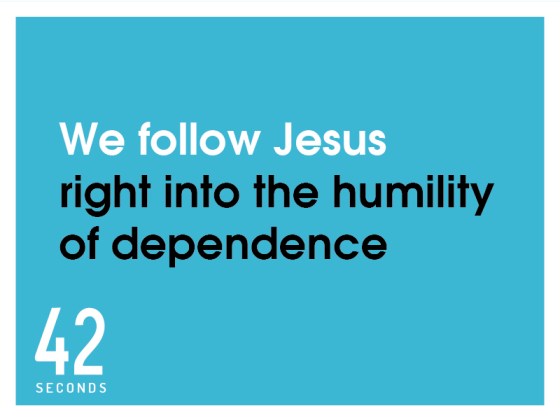
Jesus “actually invites us to the same kind of deep, connected knowing of himself that he had with his father” (124). “We will follow (Jesus) right into the humility of dependence” (137).

Readings for Worship

Joel 2:28-32      The Pentecost promise of the Spirit.

Ephesians 3:14-21  The Spirit causes Christ to dwell in you by faith.

John 14: 8-20   In dependence on the Father, Jesus promises the Spirit and sends the disciples.

Sermon: Comparison/Contrast Structure

The directive to “be Jesus” automatically sets up a kind of comparison between Jesus and the people who are asked to talk, think, live, and love like he did. The Comparison/Contrast structure lets the sermon address ways we are not like Jesus in order to help the hearers see the ways in which we are. In this case, the sermon moves from part to part, rather than from whole to whole; the ways we are like and not like Jesus are considered one at a time rather than all together.

The images used in the sermon develop the comparison/contrast structure rather than providing the shape of the sermon itself. In other words, the dynamic of comparison and contrast drives the sermon forward; the images add depth along the way. For more on the Comparison/Contrast structure see: https://concordiatheology.org/sermon-structs/thematic/comparisoncontrast/.

Sermon Outline

A. Jesus receives the Spirit (and so do I)
Like Jesus at his baptism and the disciples at Pentecost, I receive and carry the Spirit, although Jesus is uniquely the anointed Messiah.

B. Driven by the Spirit, Jesus brings the Kingdom in intimate dependence on the Father (and so do I)
The foot washing is just one example of Jesus serving in the power of the Spirit and under the authority of the Father. Jesus invites us into intimate knowing as well as active dependence.

C. Jesus lives the human life the way God intended humans to live (and so do I, except …)
Jesus lived his life as a human being filled with the Spirit. Jesus was in a human culture and crossed cultural divides, like with the woman at the well. I also live out my calling as a Spirit-filled human, though imperfectly.

D. Jesus is the sinless atonement for all sin (and I need that)
As true God and true man, Jesus’ unique job description at the cross was to be the Lamb of God and carry away my sin in a way I never could. Discipleship also includes bearing your cross daily, but not as payment for sin.

Conclusion: Jesus is absolutely unique and, in the power of the Spirit, you are absolutely like him.

Prayer for the Week

Holy Spirit, Spirit of Jesus, fill me again today. Drive me back to dependence on Jesus; cultivate in me a longing for his word; make Jesus present to me, and make Jesus present through me to the world around me.

Lord Jesus, pour out your Spirit on me again today. Share with me the same kind of intimate connection you have to the Father. As you were sent out, send me out; as you served with humility, invite me into the humility of dependence.

Heavenly Father, hear the prayers of your Spirit for me again today. Expand your kingdom and glorify your name in me and through me. As your cherished child, I commit my day to your service and to your glory. Amen.

The Sermon

The full manuscript is available here, or you can watch the sermon, below.

1 Comment

Sermon 2: Be Present

Sermon 2 of 4: Be Present, by Justin Rossow (Multiple Story Structure)

The sermon notes for this manuscript are available here.

Introduction

Much grace, mercy, and peace be to you from God, our Father and from our Lord and Savior Jesus Christ, Amen.

I want to share three stories with you today. The first comes from Mark Chapter 10. It’s the story of that rich young man who comes to Jesus. It’s a story that helps us understand what it means to be vulnerable and, therefore, open to Authentic Relationships. And ultimately, it’s a story that points us back to a Dependence on Jesus.

And then I want to tell you a little more about a woman, a PHD researcher and storyteller named Brené Brown. She has one of the five most-viewed TED talks of all time. And she did her research right at that intersection of vulnerability and Connection through Authentic Relationships.

And then I want to go back to something I talked to you about last Sunday: the conversation I had with a woman in our lobby during the middle of the week—just kind of a random conversation on a random day, but a moment that seemed to me to express what it meant to be open to somebody. But, as it turns out, I think it also gets at what Paul is talking about in the 2nd Corinthians passage for today, that we have been made “ambassadors for Christ.” That God himself is “making his appeal through us.” So I want to revisit that story again, in light of this second section of Carl’s book.

A. Jesus being truly present to the rich young man in Mark 10

So the first story comes from Mark Chapter 10. Jesus is leaving the area in which he has been teaching and performing miracles and preaching sermons, and this guy falls on his knees in front of him and says, “Rabbi, Good Rabbi, what must I do to be saved?”

And Jesus doesn’t give the typical response that a good Rabbi would have given in his day. He doesn’t give the 12-step approach to each of the commandments, how you might fulfill those commandments better and then, therefore, be truly one of his disciples.

Instead Jesus rattles off a list of the Ten Commandments. And did you notice, he didn’t even get them all? He missed some important ones in the beginning about having no other gods and having no other idols in your life, about honoring God’s name and hallowing the Sabbath day. And he even leaves a couple off at the end, too. Did you catch that? It’s the coveting ones that Jesus kind of omits.

He gives probably the middle 6 or 7. Which Jesus says is probably a good place to start. And the rich young man says “Yeah, of course. I’ve been not murdering all my life. What else do you have for me?”

And then the text says something really specific and fundamentally important for us. The text says Jesus “looked at the man and loved him.” He gave him a hard look. He sized him up. He actually set aside his own agenda, his own traveling plans, his own preaching schedule, and he sees this man in front of him; and he looks at him, and he sees him for who he truly is.

And because he looks at him as an individual, and knows him as an individual, and loves him as an individual, Jesus invites this man into discipleship. It’s the same discipleship call that he gave to James, or Peter, or John that caused them to leave their fishing nets. It’s the same discipleship call that caused Matthew to leave his tax-collecting booth.

And yet Jesus also has something very specific for this specific man and this specific situation. Jesus sees what is getting in the way of an ongoing relationship with him, so he tells this rich young man, “Sell everything you have and give it to the poor. And, then come follow me.”

I like to think if this rich young man had responded the way the tax collector and the fishermen had, we would have figured out a way to have thirteen apostles instead of twelve. But he doesn’t. He goes away sad because he had much wealth.

I want to note a couple of things about that interaction with Jesus. The first is that Jesus himself is actually being open and vulnerable to this man. He is putting himself on the line. He is making an invitation; a really difficult invitation that Jesus knows full well is likely not to be received.

Jesus risks rejection from this young man in order to be open to Authentic Relationship with him. Jesus is vulnerable in a way that actually leads to the possibility of Authentic Relationship.

And that is precisely what the rich young man was not willing to do. You see, his money in the bank was what gave him a sense of security, a sense of belonging, a sense of confidence and stability. He wasn’t willing to become so vulnerable that he could only become dependent on Jesus. That was a price that was too high to pay. So because he is not willing to be vulnerable, he is not going to be able to enter into an authentic relationship with Jesus. At least not at this point.

You know the disciples are understandably amazed and surprised when Jesus says, “Man, it’s hard for rich people to get into heaven, to get into the Kingdom!” The disciples are taken back. I mean, if this guy who has not been murdering since he was a boy–if this guy who is obviously doing something right, because God has blessed him with his financial resources—if this guy can’t be saved, well then how can anyone be saved?

And Jesus doesn’t let the disciples off the hook. He doesn’t say, “Oh, don’t worry about it.” He doesn’t say, “Well, yeah, this was a special case.” Jesus actually makes it worse. Jesus admits, not only is it hard for someone who has money to actually trust and depend on him, he says it is outright impossible. “With man it is impossible.”

And then comes the sentence that gives me hope for that young man because it gives me hope for me. “With man it is impossible, but not with God. All things are possible with God.”

That’s the first story. It helps us see how Jesus made himself vulnerable in order to enter into a relationship, and how, without dependence on Jesus, that relationship isn’t possible in an ongoing way. In fact, for us it is not possible at all. And yet, Jesus promises, all things are possible for God.

B. Brené Brown’s story about vulnerability.

[You can find the whole TED Talk here: https://www.youtube.com/watch?v=iCvmsMzlF7o Published 3 Jan 2011.]

That connection between vulnerability and openness is something that the PHD researcher and storyteller Brené Brown actually spent her career exploring. It became deeply personal for her as well.

At one point in her TED Talk, she says:

“… you know how there are people that, when they realize that vulnerability and tenderness are important, that they surrender and walk into it. A: that’s not me, and B: I don’t even hang out with people like that. For me, it was a yearlong street fight. It was a slugfest. Vulnerability pushed, I pushed back. I lost the fight, but probably won my life back.”

You see what started for Dr. Brown as a one-year research project on connection became a six-year research project on vulnerability. Based not only on her depth of research, but on her own personal experience, Brené Brown shares several insights into the relationship between vulnerability and connection that I think applies to our conversation for today.

Dr. Brown tells us that one of the ways we avoid vulnerability is to “make everything that’s uncertain certain.” We take anything that is messy in our life and try to clean it up. We take anything that is maybe open-ended or complex, and we try to simplify it. We take everything that is uncertain and make it certain. Brown says:

“Religion has gone from a belief in faith and mystery to certainty: I’m right—you’re wrong—shut up. That’s it. Just certain.

“The more afraid we are, the more vulnerable we are, the more afraid we are. This is what politics looks like today. There’s no discourse anymore. There’s no conversation. There’s just blame.

You know how blame is described in the research? A way to discharge pain and discomfort…”

I was struck by her reference to religion.

Do you know the kind of theological discussion she is describing? Have you seen them play out on Facebook? Have you maybe joined in on one on Twitter? Do you typically take the, “I’m right—you’re wrong—shut up” position when talking to someone who doesn’t fully agree with you on every aspect of your faith?

I am not suggesting that we should practice doubt a little bit more in our lives, or that somehow you should be less certain about the promises that you have in Jesus, or even that the theology we believe, teach, and confess is not solid and sure.

I do not want you to be less certain, but I do want to notice the fact that when we shut down a conversation with a pat answer, even if it is a correct answer—if we shut a conversation down with a pat answer, we have lost the opportunity to actually see the person in front of us, to hear what they are thinking and what they are going through. We lose the chance to be vulnerable and then, therefore, open to connection with the real person in front of us. And one thing I am convinced of when I read the story of Jesus is that connection in an authentic relationship is absolutely essential when talking to someone about following him.

It’s not like theology is not important, but having good theology AND an open and authentic relationship with the real person in front of you is absolutely essential if you want to talk to them about Jesus.

Brené Brown continues to describe how we try to avoid vulnerability. She says we try to make everything look perfect:

“And we perfect, most dangerously, our children. Let me tell you what we think about children. They’re hardwired for struggle when they get here. And when you hold those perfect little babies in your hand, our job is not to say, ‘Look at her, she’s perfect. My job is just to keep her perfect — make sure she makes the tennis team by fifth grade and Yale by seventh grade.’ That’s not our job. Our job is to look and say, ‘You know what? You’re imperfect, and you’re wired for struggle, but you are worthy of love and belonging.’ That’s our job. …”

I love how Brené puts it: You know what? You’re imperfect, and you’re wired for struggle, but you are worthy of love and belonging. That’s what I want to say to my kids. That’s what I want to say to my church. That’s what I want my church to say to their pastor.

Ultimately, I think that’s what Jesus wants to say to you today: “You know what? You’re imperfect, and you’re wired for struggle, but you are worthy of love and belonging.

Jesus—do you get that?—Jesus thinks you are worthy of love and belonging.

Just as he looked at that messed up young man who is outwardly perfect but confused, and loved him just as he was, in the same way Jesus looks at you and your life and your mess, and your priorities, and your beauty, and your sin, and your shame, and he knows you and he loves you and he is fully present for you.

Jesus makes himself vulnerable again to you today. He knows you might reject his invitation. He knows you might walk off, because you have done it before. But he makes himself open to you again and invites you into a deeper relationship with him. He takes that risk because he thinks you’re worth it.

Jesus thinks you are worthy of love and belonging.

Dr. Brown ends her TED talk with a list of things we can do to experience a more authentic relationship and connection in our life. She says:

“This is what I have found: to let ourselves be seen, deeply seen, vulnerably seen; to love with our whole hearts, even though there’s no guarantee …

“And the last, which I think is probably the most important, is to believe that we’re enough. Because when we work from a place, I believe, that says, ‘I’m enough,’ then we stop screaming and start listening, we’re kinder and gentler to the people around us, and we’re kinder and gentler to ourselves.”

If Dr. Brown’s research is right, if being able to say, “I am enough,” is what it takes to connect authentically with other people, if being able to say, “I am enough,” is what is essential to being open and vulnerable, then there’s no reason why we, as followers of Jesus, can’t be the most authentically connected and vulnerably open people on the face of the planet.

You want to know if you are enough, just the way you are? You want to know if you are enough, even with all your failures and your past history and personality defects?? You want to know if you, as an individual, are enough??? JESUS THINKS YOU ARE WORTHY OF LOVE AND BELONGING.

On your own, you don’t have to be good enough or popular enough or promoted enough. Jesus died for you. Jesus rose for you. Jesus forgives you. Jesus is shaping you for his use in his kingdom. Jesus thinks you are worthy of love and belonging. And that is enough to make you know you have a place. You have a place where you now have no doubt whether you belong or not. You can be confident in that love, not in your love and not in mine, but in his. Jesus thinks you are worthy of love and belonging.

And when you then begin to connect authentically with other people from that place of confidence, from knowing that Jesus died for you and, therefore, you matter—when you approach people with that confidence, when you are open to them, when you make yourself vulnerable, when you risk loving someone else or being kind to them even though they may not show love or kindness in return, when you risk that kind of vulnerability in order to enter into a real relationship, then you are following in the footsteps of Jesus, who loved this messed up world all the way to the cross.

Jesus made himself vulnerable, even to death on a cross, that he might be truly present for you. Do you want to know if you are enough? Jesus went to the cross because he wanted an eternal relationship with you. You can take that to the bank.

C. Jesus present in your attention to others, as if God were making his appeal through us.

If you have been reading around in this 42 Seconds book this week then you’ve heard Carl Medearis say some things like: My new strategy, aligned a bit more with Jesus, is to exhibit patient listening in real-life conversations that go wherever the person and God want them to go” (65).

It kind of reminds me of what Dietrich Bonhoeffer said in his book, Life Together: We should listen with the ears of God that we may speak the Word of God” (99).

And all of that makes me think again of Paul’s second letter to the Corinthians, where he says, “We are ambassadors for Christ, as if God were making his appeal through us: be reconciled to God.”

And while that is in the contexts of a founding pastor with his kind of struggling congregation, I think Paul would also admit that the ministry of the baptized is a ministry of reconciliation, that when you are in your workplace or your family or your neighborhood, you are the ones sent by God as ambassadors through Christ, that God is making his appeal through you in your everyday, ordinary lives.

And that helps me to understand the story I told you last week a little bit better. Remember, I told you I had a conversation with a woman, and it had kind of a rocky start because I didn’t really want to be in conversation with her, and I’m not sure she wanted to be in conversation with me, but we somehow ended up talking.

I had to make a conscious decision whether I was going to be open to her or not, whether I was going to take time out of my agenda with her, whether I was going to let go of sermon preparation in order to have a conversation with this woman.

I had to decide to be open to her. But once I did, then I found something take place that I wasn’t prepared for. Remember I said to her: “You know, whenever I have trouble sleeping, it is usually because I have a lot on my mind.”

Looking back, I realized that I was actually being vulnerable to her in that moment. I was letting her know that I sometimes have trouble sleeping, because I have a lot on my mind.

I know it was a small crack, just a little openness; it was a small dose of vulnerability, but she responded in kind. Because when I said that, she responded by telling me about her husband who is already living in Ohio and the 4 kids that she was taking care of while they were trying to sell their house. And about the 4 moves in 5 years and how that had been difficult for her. She took my invitation to vulnerability and opened herself up even more.

So maybe that is why it seemed natural for me to invite her into prayer, to say, “Hey, could we pray about that right now?” I mean it seemed a little bit risky, and I am not in the habit of asking people I have never seen before if I can pray for them, but it seemed natural at the time.

I think what was going on was that, as I was listening to that woman, Jesus was present, that Jesus himself was listening to that woman through me. I think that Jesus was hearing her struggle, that Jesus was sharing in her pain, that Jesus was opening his heart to this woman by opening my heart to her, as well.

So when I prayed for her, when I asked her to pray, it was no longer just me on my own trying to do the best I could to be a good pastor and Jesus-follower, but it was the Spirit of Jesus himself, the one who intercedes with groans that are too deep for words. It was the words of the Spirit of Jesus that he prayed through me for that person.

Because I found myself not praying a little prayer I had written down and had in my pocket – just in case. I didn’t pray something out of the Lutheran Service Book. I didn’t pray a pre-made prayer, but I simply spoke words from my heart for that person through Jesus. And I think the Spirit was active in that moment, praying for her as well.

Conclusion

So this week, as you encounter the people around you, as you kind of try to figure out what it means to be just a little bit vulnerable or open to someone, would you please imagine what it might be like, would you look for an opportunity, will you be aware of the Spirit active in you? Because the Spirit is active through you, as well.

Will you look for a conversation where you can say something that feels a little risky, where you can make an invitation that might be turned down, where you can invite someone into prayer even though the response might be, “Are you crazy? Are you one of those Christian folk?”

Would you look for a time when you can be open, when you can be vulnerable, when you can take a next step into a relationship with someone in your life because that is what Jesus is inviting you to do?

Will you join me in trying to practice Carl’s non-strategy strategy, to be open to real life conversations with the person in front of you and let that conversation go wherever that person and the Holy Spirit want the conversation to go?

Because I think you will find that, because Jesus is truly present for you, Jesus is truly present through you, for the sake of the people around you.

Amen.


Editor’s Note: This resource supports preachers and congregations in the use of the book 42 Seconds: The Jesus Model for Everyday Interactions by Carl Medearis. You can visit the 42 Seconds Resource page at justinrossow.com to see more.