The family has gathered. We ride the ups and down of sudden changes in breathing or consciousness. We share stories and pictures. We are waiting for Dad, my father-in-law Jim, to die.
As I look out the back door to the lake, I am struck by the beauty of these summer days. The sun shines. The birds sing. The breeze breathes through the trees and hovers on the face of the waters.
If I change my focus, however, I mostly see dirty screen: metal mesh marked by greasy hand prints mingled with the remains of bugs that didn’t quite make it in, or out, as the case may be. The beauty of the creation is relegated to background noise when my focus is on the dirty screen.
I guess waiting for death feels a lot like that. In the near ground, so close it demands my attention, is the dirty reality of death. And it is ugly: labored breathing, rattling lungs, pale flesh, sallow cheeks. It would be easy to stay focused on what’s right in front of my face.
But change the focus just a little and the New Creation comes into view: the promise of life, real and eternal life, of days spent in the light, of the Spirit hovering over His people. In the moments I catch a glimpse of that promise, the present suffering stops taking center stage.
Don’t get me wrong, the pain of the present is still there. But like the screen door, it stops taking up my whole field of vision. I can see through the grimy reality of the fallen creation and focus more on the reality of the New Creation, the promise Dad will experience in full in the resurrection of the flesh.
Death is ugly. But it’s not the final word. Changing the focus helps me see that.
And one day—the promise is soon—the screen door will be ripped off of its track and the dead will be raised imperishable and we will be changed.
Soon, Dad will step into the light. And when the trumpet sounds, his body will rise, and the New Creation will be his only reality.
I can see that already now, when the focus is right, even though my present view is through the screen.
I, for one, can’t wait for the door to be opened once and for all.
Preachers sometimes find themselves saying the same thing over and over again. Regardless of the text or day, they feel like they are running the proclamation of the Word through the same theological ringer week after week. Yearly celebrations of the same festival can magnify that feeling: I’ve preached Easter and Resurrection 15 years in a row—what is there left to say?
If the preacher feels that way, you can imagine what the congregation is thinking …
Heresy has killed its thousands; boredom its tens of thousands.
How, then, do preachers tell the old, old story in new and engaging ways not only when the theme varies from week to week, but when the primary focus stays the same from year to year? How do you preach Easter or Good Friday or Transfiguration or Christmas or the Baptism of Our Lord again and again and again without feeling like every liturgical festival is Groundhog’s Day?
One primary answer has to do with sermon structures.
I preached the two sermons below at St. Luke, Ann Arbor on consecutive Easter Sundays. While the primary texts differ, the focus remains the same: the resurrection of Jesus and the reality of death and resurrection in the lives of the hearers.
Although both sermons say some of the same things, they feel very different. The emphasis of the content has changed because the presentation of the content has shifted. In spite of very similar themes, the difference in sermon structure changes the experience of the sermon.
Easter Sermon 1: Four Pages Structure
In 2013, St. Luke was just coming to grips with the fact that one of our long-time and well-loved staff members was not going to recover from his recently diagnosed brain cancer. Such a sudden and public terminal illness in the congregation made the law of our own mortality a very palpably part of our life together.
When I went to write my sermon for Easter, I began with this experience of the hearers: I wanted to use the text and the day to speak Gospel into that lived experience of Law.
David Schmitt suggests that every Lutheran sermon will weave four threads together to make the work of art that is the preaching event: Textual Exposition, Theological Confession, Evangelical Proclamation, and Hearer Interpretation. (You can read Schmitt’s excellent article “The Tapestry of Preaching,” here.)
While we regularly begin the preaching task by considering the text, there are times when we start with the experience of the hearers and work our way back into the text, our theological framework, and the preaching of the Gospel. In this sermon, I began with the experience of the hearers and wove the other three threads into the sermon.
So the people are facing the death of a loved one in a very real and tangible way. Easter is the answer to that experience of the Law. But how to make sure this Resurrection sermon doesn’t sound like a reheated version of last year’s pancake breakfast?
To keep that Easter sermon fresh I borrowed language from a new song we were just learning as a congregation; and I paid close attention to the structure of the preaching event.
In Lent of 2013 we were just learning Kip Fox’s compelling song, “This Dust.” The refrain captures the essence of what I wanted the Easter sermon to do.
Death is all around us; We are not afraid. Written is the story: Empty is the grave.
That refrain, repeated throughout the song, served as the hook for the whole sermon. It shaped the way I phrased both Law and Gospel. It helped add connective tissue and thematic unity. It named two of the worst enemies of God’s people—fear and death—and provided the antidote to both—Jesus’ empty grave.
Armed with this phrase, I still had to decide how I would structure the sermon. In the end, I decided that the trouble and grace expressed in this refrain matched well a structure that expressed the trouble and grace in the text and in the lives of my hearers.
This dynamic sermon structure is often called the Four Pages, not because it’s limited to four sheets of paper, but because there are four distinct moves in the sermon. You can read more about Paul Scott Wilson’s The Four Pages of a Sermon here, but the four basic moves are:
Trouble in the Text
Trouble in the World
Grace in the Text
Grace in the World
These four movements can come in any order within the sermon for different effect. Weaving together Fox’s refrain with Wilson’s structure, I got this sermon outline:
Trouble in the Text: death was all around the disciples and they faced fear.
Grace in the Text: the disciples learned the end of the story—empty is the grave!
Trouble in the World: death is all around us and we face fear.
Grace in the World: we know the end of the story—empty is the grave!
The words from the song provided unity, but these four movements structured the sermon as a whole. The structure, in turn, shapes and enables the experience of the Law of death and the Gospel of resurrection. The theme is certainly not unique, but the structure expresses the theme in a unique way.
You can listen to the sermon below or read the last draft of the sermon manuscript here. You can also read an interview with Kip Fox about This Dust here.
Easter Sermon 2: Metaphor Structure
Easter of 2014 came at the end of a Lenten sermon series called The Season of the Cross. We were just finishing a look at different crosses (Anchor Cross, Jerusalem Cross, Ankh Cross, etc.) and we wanted to keep with the theme by talking about the meaning behind a symbol for Easter.
Our preaching team decided to focus on the Easter Lily as a symbol for resurrection. Preaching on that symbol connected Easter worship to the Lenten series on the symbolism of different crosses.
In terms of the Four Threads, the sermon began with Evangelical Proclamation: because I knew I wanted to preach the Gospel in terms of an Easter lily, I shaped the Textual Exposition, Theological Confession, and Hearer Interpretation accordingly. Of course, the Easter Lily connects directly to themes of death and resurrection, so it fits well with the theme for the day.
Notice that this second sermon deals with some of the very same themes as the first. Perhaps every Easter will deal with death and resurrection as part of the Law and Gospel proclamation. But changing the structure that gives rise to the preaching event changes the experience of the hearers.
Instead of working with the Four Pages structure, I chose to take advantage of the metaphorical potential of the Easter Lily symbol and structure the sermon according to the Metaphor Design. You can read up on this design here.
Briefly, the Metaphor Design takes the basic dynamics of metaphor interpretation and uses them to structure the experience of the sermon. The four moves of this kind of sermon are:
Evoke the Source
Map to the Target
Test the Limits
See Through a New Lens
Using these basic dynamics of metaphor, I crafted the sermon that explored the dynamics of an Easter lily and its relationship to a bulb and used that dynamic to look at both the text and the lives of the hearers. All four threads of the tapestry of preaching are present; the structure of the loom as changed.
This Easter sermon felt very different because it was shaped in a very different way. The structure of this Easter sermon was something like this:
Evoke the Source: bring the experience and knowledge of bulbs and lilies to mind.
Map to the Target: the dead body of Jesus is like the bulb, the New Creation, Resurrection body of Jesus is like the full-grown flower.
See Through a New Lens: interpret the text through the logic of bulb/flower (continuity and discontinuity; hard to believe if you didn’t know better; end result is much more alive).
Map to the Target: our bodies/lives are like bulbs, our New Creation, Resurrection bodies/lives will be the full-grown flower.
See Through a New Lens: interpret our lives through the logic of bulb/flower.
Test the Limits: Unlike a lily, we already experience the promise of the New Creation flower even as experience life as a bulb.
The logic of the image is central in this design. The contrast between the bulb and the flower and the inherent relationship between the two is the primary dynamic of the image and of the sermon.
You can watch the final product here:
Though both of these sermons were preached on Easter and both dealt with the dynamics of death and resurrection, the experience of each sermon is very different. This variety of expression arises from the diversity of structure: shaping the progression of the sermon over time will shape the way the hearers experience the sermon.
If two sermons on the same festival with the same theme can end up sounding so different, it stands to reason that changing the structure from week to week will also allow for a variety of expression and experience. Conversely, using the same structure week after week will lead to stagnation, even if the theme and focus change from Sunday to Sunday.
The more sermon structures you are aware of as a preacher, the greater potential for variety you have available.
If all you have is ketchup, everything tastes like a hamburger.
The tale of these two Easter sermons is simple: changing the structure of the sermon changes the experience of the hearers. Preachers can use that insight to help their preaching ministry stay fresh and engaging for their hearers. (And sermon variety is a lot more fun for the preacher, too!)
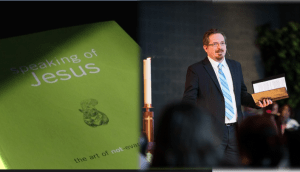
Speaking of Jesus: The Art of NOT Evangelism isn’t intended to be a book on preaching. It’s a book about the primary ways we interact with people who don’t know Jesus.
So it’s a book about evangelism, or, as the subtitle suggests, a book about NOT doing evangelism the way we used to.
As I read and digested Speaking of Jesusfor my own personal use, however, I began to notice the way I typically talked began to shift slightly. Some of the vocabulary I had picked up from Carl Medearis, either in his book or in person, began to be the way I usually said things.
What’s more, I started to talk to other people about using that new vocabulary; I found that my preaching, in places, sounded more and more like Carl.
Sometimes Carl gave me a way of saying things I was already feeling; sometimes Carl challenged me to say things differently, and I’m still trying out a new voice. But either way, Speaking of Jesus has found its way into my pulpit. Here are a few example of how.
Stop Being on the Defensive
I’ve never been one who enjoys conflict, though I see how a healthy disagreement can bring growth. One of the things I dislike about “defending the faith” is how easily apologetics can turn into atheist bashing. I once heard it said that if you disagree with me, you must be either stupid or evil. It’s easy to assign non-Christians one or both of those designations.
Don’t do it.
There are some really decent and intelligent people who don’t know and follow Jesus. Our mission as Church is not to blow these pagans out of the water. Rather, we are to point them to Jesus. You can’t actually do both at the same time.
Carl’s pretty good at encouraging people to give up on winning the war with non-Christians and stop trying to beat people into submission / into the Kingdom. The whole concept of being in attack mode fits well within the cultural metaphor Argument is War, something you can read more about here: Outreach and Warfare.
Not only attack mode, but even being on the defensive is part of the broader Argument is War thinking in our culture. When we feel under attack, we respond to non-Christians in a reflexively combative way. Speaking of Jesus helps point that out.
Here’s one of many helpful quotes on the subject:
But when injured, we change. Under fire from a hostile and misunderstanding world, we grow defensive, begin challenging and targeting different opposition groups, demolishing the characters and teachings of individuals through media outlets, pamphlets, and even sermons. It becomes very difficult to “love the sinner, hate the sin” when we hole up in a defensive posture (170).
Medearis wants us to give up on trying to defend the faith or the Church to unbelievers; instead, he wants us to talk to them about Jesus.
That invitation to engage people as people and not as enemies has also found its way into my sermonizing. I’ve started to tell people they don’t have to defend Jesus or the history of the Church.
I even stole something I saw Carl do live and added it to my repertoire: at a pastors’ conference in Texas, Carl used his closed fist to show the way we tend to hold on to and defend the Truth.
He contrasted that with holding the Truth in an open palm, making it available for others to see, poke at, or maybe even borrow … If we know it’s the Truth, we don’t have to defend it; we can hold it loosely enough to let others have some, too.
That basic idea resonated with me. A year later, I heard Bob Goff speak at a mission-minded conference (#Wiki13) in Houston. He said something similar about holding out water to marathoners running past his house. I joined the two images in a sermon on stewarding the Christian faith.
The clip below picks up at 14:58, about two-thirds of the way through a sermon on the stewardship of teaching. One of the main goals of the sermon was to get people to stop trying to protect the teachings of the faith. Instead, I wanted them to use the teachings of the faith as protection in a changing world and as tools to reach out to others.
I find that emphasis on using rather than protecting the teachings of the faith to be both biblical and something I think Carl Medearis might approve of …
Keep Jesus at the Leading Edge
I think most of us would say we want to keep Jesus at the center of our theology; as long as we are only talking about theology, I think that’s exactly the right sentiment.
I’m all for being Christocentric in our preaching, teaching, and systematic theology. The Gospel message is at the heart or center of who we are, and while all theology connects back to the center, some of our theology is admittedly more at the periphery.
As long as this metaphor of central/peripheral describes the importance of different theological formulations or expresses a desire to be centered (focused on) Jesus, sign me up: I am there.
When we confuse our theological system with the Kingdom, however, some bad things happen. We begin to see ourselves as “in” the Kingdom with Jesus and others standing on the “outside.” In this scenario, the peripheral issues in our theological system become blended with the outside boundaries of a Kingdom container which includes US but not THEM.
If you’d like to explore that phenomenon a little more in-depth, check out the article Outreach and Containers. What’s important for our current discussion is simply the observation that we tend to make the outskirts of our theology or the boundary issues of our morality the place where we encounter outsiders.
In other words, we tend to confront / encounter new people in the context of moral debate (gay rights, life issues) or theological boundary issues (close communion, infant baptism).
If we keep Jesus in the center but all of our conversation with outsiders takes place on the periphery, guess what we never get a chance to talk about? Jesus.
That’s right. The single most important and life changing thing about our faith–the person of Jesus–is kept at the center, and therefore miles and miles away from outsiders.
Stop it. That’s just not right. Put Jesus back at the leading edge of our encounter with outsiders (while keeping Him at the center of our theology).
Don’t make someone conform to your political, moral, or theological view before you will talk to them about Jesus; you’ll never get around to it.
I remember moving the creation/evolution presentation out of the first session for new people while I was still on vicarage. It’s not that I don’t think creation is a vital part of our faith; it’s just that if someone leaves that first new member class scratching their head and wondering if they’ll ever be back, I want the stumbling block to be Jesus crucified and risen. I still teach on creation, but I lead with Jesus.
I find Speaking of Jesus to be very helpful in this regard. Medearis shows a strong sense of the visible and invisible Church and suggests we spend less time worrying about the boundary you have to cross to be “in” the kingdom and spend more time actually talking to people about Jesus. Here’s just one of many quotes along those lines:
Instead of trying to define the line that separates the saved from the unsaved, we point to Jesus. We don’t have to “own up to” Christendom this way. We simply follow Jesus … If we’re saved into the boundaries of a circle, we owe our allegiance to that boundary, and we’re going to try to bring others inside it (72; 74).
In a sermon on reaching out, I sound kind of like Speaking of Jesus: the focus is on following, not on getting it right first and then following.
“How can we go to someone who doesn’t live like I do, or vote like I do, and love them in a such a way that invites them to follow Jesus?” That’s a question that confronts the Church in our current culture. And I think Medearis helps us ask the right questions.
The following clip starts at 15:30, well into the sermon. The text talks about Jesus going on pilgrimage to Jerusalem and leading His disciples right through Samaria–a place where people don’t live or worship like the disciples do.
The sermon is an invitation NOT to take the devout detour around people who don’t live like us. Like I say in the sermon, I don’t have all the answers to these questions, but I think we need to ask them more and more often and try to answer them together.
That sermon and others like it also share the theme of “following Jesus.” That journey metaphor is a great alternative to the “in vs. out” container thinking we often fall back on. For more, see the article Outreach and Journey or the sermon Invitation to the Discipleship Journey.
Distinguish between Jesus and Religiosity
One of the most important, and difficult to hear, messages of Speaking of Jesus is that our own religious structures can get in the way of introducing people to Jesus. One of the challenges of understanding Medearis’ point is that language starts getting slippery: most Christians understand one thing by the term “Christianity” while most of the unbelieving world understands something quite different.
And in some ways, even that disconnect proves the point: as long as we insist on external packaging of any kind, including good, helpful practices or labels, we run the risk of using tradition to obscure the Gospel.
Of course, I would like to say my particular theological tribe, the Lutherans, are least susceptible to this, if for no other reason than we have been waving that particular flag from our very beginning. But the problem with the proverbial Church-going fish is that it has no unbiased vantage from which to view the water.
So we must always be asking what do we do that helpfully delivers the goods for some but may stand in the way of God’s mission for others? What about our life together runs the risk of being merely religious instead of pointing people to Jesus?
Everyone lives in a context and it’s good to be sensitive to the American Christian context as much as any other. (37)
It’s hard to be aware of how much our context influences our message, but one of the things Speaking of Jesus taught me is that it is possible. It’s possible to set aside religiosity and focus on Jesus.
It’s not easy, but it can happen. And when that focus on Jesus makes its way into conversations with outsiders, it’s a lot easier to get at the heart of what’s important (by that I mean JESUS) a lot faster.
This response from a Muslim is typical to the stories Carl tells in his book. I want people to say these kinds of things about me, too.
“If this man had talked about theology or doctrine or even Christianity, I wouldn’t have been interested. I’ve heard all of that from my Christian friends. But he talked about Jesus in a way I’ve never heard before and had never thought of. I thought it was amazing (37).”
I guess I take comfort in the fact that this kind of talking was something Carl had to grow into, too. Of the early part of his ministry, Medearis says:
I was so busy trying to convert people to Christianity that Jesus never had a chance (38-39).
Could that ever be true of our congregations or our ministries as well? If so, what can we do to raise that awareness? What might we say to make people less comfortable with religiosity and long for Jesus a little more?
Again, this is a growth area for me personally, and in my preaching. I don’t think I am there yet. But I pray I am moving in the right direction.
I actually said, out loud, at church, in front of God and everybody: “If there is anything in your life that you label ‘religious’ and it doesn’t drive you to your knees in the presence of Jesus, get rid of it; it doesn’t belong.” Yeah. Ouch.
I don’t think I would have said it that way ten years ago. But I think it’s right. That may not be how you want to start a sermon, but you might need to say something like it from the pulpit on occasion.
The sermon below is on the Healing of the Ten Lepers from Luke 17. The whole sermon focuses on three discipleship movements or postures, so I’ll start the sermon video at the beginning.
The rather shocking quote about getting rid of religious things in your life that don’t lead you to Jesus happens around 7:39. But the whole thing expresses my developing understanding of discipleship and how to preach it.
In that process of developing a vision and language for discipleship, I am indebted to Carl Medearis and his one-track mind. It sounds overly simple and rather obvious, but it bears repeating: discipleship is all about JESUS.
Variety is one of the many benefits of being intentional about the way you structure the sermon from week to week: even when there is strong unity of theme, the experience of the hearers doesn’t become predictable or rote.
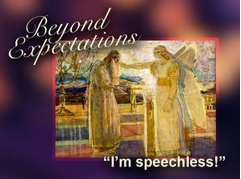
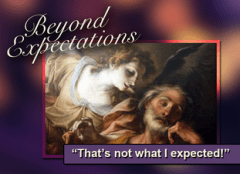
Our 2013 Advent series is a case in point. The unifying theme was “Beyond Expectation” and each week we took a closer look at characters and stories leading up to the birth of Jesus.
Each of the weeks had a lot in common–all of the readings were strongly narrative, each included specific characters and their reaction to good news, each had an element of surprise and a sub-theme of preparation. But the sermons felt very different from week to week.
The first three weeks of Advent provide enough of a sample to make the point: variety of sermon structure keeps the experience of the hearers fresh even when the content is similar.
Advent 1: Zechariah (Story Interrupted)
Advent 1 focused on Zechariah in Luke 1:5-22. The Zechariah narrative features several discrete movements in the story; I wanted to focus on these dynamics, so I chose to shape the sermon with a narrative structure, specifically the structure dubbed “Story Interrupted.”
The primary feature of the Story Interrupted structure is the retelling of the Biblical narrative with specific breaks in the story where the preacher makes application to the faith and lives of the hearers. You don’t have to tell the narrative this way–you could tell the whole story and then make application or even spend the first part of the sermon setting up the narrative and then closing with the entire story itself. But the Story Interrupted structure particularly emphasizes the narrative moves within the text while also bringing the story home to the hearers.
As I went to break up the moves in the Zechariah story, a second narrative structure came to mind. Eugene Lowry developed his famous “Lowry’s Loop” to help preach parable texts; it has since been applied to all kinds of narrative sermons. Looking at the narrative in Luke 1:5-22, Lowry’s basic elements all seem to be present. So the sermon took on this shape:
Story of Zechariah (Oops!): Faithful people living without evidence of God’s blessing. Story Interrupted: Do you ever feel that way?
Story of Zechariah (Ugh!): When the promise comes, Zechariah is no longer able to receive it with faith. Story Interrupted: Maybe you know how Zechariah feels …
Story of Zechariah (Aha!/Whee!): The promise is bigger than the one who receives it. Story Interrupted: God works like that in your life, too.
Story of Zechariah (Yeah!): The time of silence and preparation leads to songs of joy! Story Interrupted: Our Advent preparation leads to songs of eternal joy!
Here is the sermon, preached at St. Luke–Ann Arbor.
Advent 2: Mary (Frame and Refrain)
The second week of Advent took us to the Annunciation in Luke 1:26-38. The same angel again shows up with a surprising message. This time, however, I chose to highlight one particular aspect of the story that was central to what I wanted to accomplish in the sermon. In this case, the difference between Objective and Subjective Justification is at the heart of the sermon. Mary clearly believed in God’s universal plan of salvation; in the text, that universal salvation becomes concrete, up close and personal.
The structure I chose therefore highlighted that dynamic of “It’s for me?!” The “Frame and Refrain” sermon structure uses an image at the beginning and end of the sermon (like a frame) and then brings that image back throughout the the sermon as a way of providing thematic unity (like a refrain).
In this case, the image of finding YOUR name on the biggest and best present under the tree became the introduction, the conclusion, and the unifying image of the sermon. It was also the lens through which I chose to look at the text, the faith experience of the hearers, and the way the hearers live out their faith interacting with those around them. The final sermon structure ended up looking like this:
Frame: It’s for me?!
Part 1: Mary’s experience in the text Refrain: It’s for me?!
Part 2: The hearer’s experience of the Gospel Refrain: It’s for me?!
Part 3: A realistic, non-heroic depiction of the hearer living out the Gospel in their own life Refrain: It’s for me?!
Frame: It’s for me?!
Here’s what the final sermon sounded like:
Advent 3: Joseph (Comparison/Contrast)
Although both of the sermons above come from narrative texts that focus on strong characters who receive an angelic visit and promise of a child, the two sermons feel very different. The different sermon structures shaped the experience of the hearers in different ways.
The Frame and Refrain structure belongs to the category of Dynamic Sermon Structures and is one of a variety of image-based designs. The Story Interrupted structure is one of the narrative techniques in the category of Textual Sermon Structures (though in this case I doubled-dipped and utilized Lowry’s Loop, which on its own is actually a Dynamic structure). Because I was consciously trying to proved variety for the hearer from week to week, I wanted to do something different when we got to the story of Joseph in week three (using Matthew 1:18-25 as the text).
The three large categories of sermon structures are Textual Sermon Structures, Dynamic Sermon Structures, and Propositional (or Thematic) Sermon Structures. The flow of the text itself shapes the sermon in the Textual Structures; the experience of the hearers guides the shape of the sermon in the Dynamic Structures; the logical relationship between the parts of the sermon provides structure and movement in the Propositional Structures. (For more on these types of sermon structures, follow the link at the end of this article.)
So by the time we get to Advent 3, I am looking at preaching a sermon on Joseph structured in a way shaped by the logical presentation of a primary thought. In no way does propositional mean boring or esoteric (necessarily…); but what provides both unity and movement within the sermon is shaped by the logic of the presentation.
As I prayerfully considered the story of Joseph and the experience of my hearers, I began to hone in on one Propositional Structure in particular: Comparison/Contrast. This sermon structure allows the preacher to develop both similarities and differences between the text and the lives of the hearers.
I chose to present the story of Joseph one part at a time rather than dividing the sermon into two primary sections. This movement from part to part emphasizes the points of comparison and contrast. Moving from whole to whole, on the other hand, helps the hearers remember the two primary topics being discussed.
By the time I was done, I had this sermon structure prepared:
Introduction: That’s not what I expected!
1. Seeing godly character and striving to be like that. A. Joseph: faithful to the law and compassionate, obedient to the Word and humble. A1. Us: compare/contrast
2. The kind of God we have B. Joseph: God at work in confusing situations B1. Us: compare/contrast
3. Hold on to God’s Big Picture promises C. Joseph: name Him Jesus (Yahweh is Salvation); Emmanuel (God with us). C1. Us: compare
Conclusion: So much more than I expected!
Even as I preached this sermon, I was aware of how different was from many Law and Gospel sermons I have heard (and preached) over the years.
The development here is from least important to most important, which somewhat surprisingly places the sanctification preaching at the very front of the sermon rather than at the end.
Also, the Law/Gospel dynamic is not limited to two large chunks in the sermon: part 1, LAW; part 2, GOSPEL. Instead, there is a Law/Gospel dynamic in both the second and third sections of the sermon.
Providing this kind of variation in sermon structure helps the hearer engage in the material more actively from week to week. This variety also increases the chance that different kinds of learners and hearers in the congregation will feel engaged regularly.
Here is the sermon on Joseph:
Three sermons in a row, all in Advent, all from the Gospel lesson, all based on narrative texts with primary characters, Gabriel the messenger, and the promise of a Savior. Yet three very distinct sermons structured in three very distinct ways.
As a preacher, I find sermon structures to be tools that help me find joy, creativity, and insight as I interact with the text on behalf of the people God sends me to week in and week out.
If you know even the basics of contemporary metaphor theory, then you know that in the metaphor “Richard is a gorilla,” what we know (or think we know) about gorillas is the “Source domain.” The metaphor works by taking what we know and expect and how we reason about gorillas and mapping those inferences and expectations on to Richard, who in this case is the “Target domain.” For more on the basics of Source, Target, and cross-domain mapping, you can review The Basics to get up to speed.
Moving beyond the basics, you probably also know that the same Source domain can be used in a variety of ways to map inferences and reasoning onto a variety of different Target domains: Richard can be a gorilla, but so can Susan, that linebacker over there, the stock market, metaphor theory, etc.
Building on the principle that one Source domain can have multiple Target domains, it is also possible to use a singe Source domain as a unifying image to talk about several related or interconnected Target domains. Several diverse Targets can be brought together in a way that allows the Source domain to shape our understanding of each. These divergent Targets are then also seen in a new relationship to each other.
Whether or not these multiple domains are “actually” related may be open to debate; in much the same way that a metaphor can create seeming similarity, metaphor can also create seeming relationship. But even if the Target domains are somehow related apart from the metaphor, the use of a single Source domain highlights similarities while down playing differences. (Metaphor always both highlights and hides, but in this case this function is working across several Target domains instead of just one.)
I recently preached a sermon on Psalm 133. By it’s very nature as a psalm of ascents, used by pilgrims traveling to Jerusalem to the Temple, but speaking of Aaron, the High Priest during the time of tabernacle and wilderness wandering, there is already a dynamic of multiple target domains in the primary anointing metaphor of the psalm.
Add to that the fact that “the Anointed One” is a good translation of both the Hebrew “Messiah,” and the Greek “Christ,” AND add to it the fact that the sermon is being preached in a Christian congregation at a very different time and place, and all of a sudden the Target domains start piling up.
A single image in the psalm is used to navigate all of these Target domains. The diversity of topics is mediated by the unity of the imagery. In the end, a single Source domain is used to help us look at several Target domains from a new perspective, and to relate them in a new way.
The primary text for this sermon is Psalm 133:1-2.
How good and pleasant it is
when God’s people live together in unity!
It is like precious oil poured on the head,
running down on the beard,
running down on Aaron’s beard,
down on the collar of his robe.
The Source domain here is the moment when Aaron was consecrated by anointing with oil and set into his office as High Priest. The sermon evokes details (some even multi-sensory) in the Source domain for the purpose of mapping these details and relationships on to several Target domains. Repetition adds unity to the sermon and helps guide the process of interpretation that the hearers themselves must perform.
So the Source domain is Aaron and the anointing oil. What is the Target domain? Expressly, the Target domain is living together in unity.
But who is experiencing this unity and how? The answer to that question leads to multiple Target domains. Once the Source has been sufficiently evoked, it is mapped onto:
The pilgrim people of God singing this psalm of ascents;
Jesus as the Anointed One and His function as High Priest and Sacrifice;
Jesus as Resurrected High Priest and Mediator; and
the congregation hearing the sermon as another instance of the pilgrim people of God.
From Aaron the High Priest, to OT pilgrims, to Jesus on the cross, to Jesus at the right hand of God, to the people in Ann Arbor, MI–that’s quite a journey for a single sermon! The one Source domain used to view multiple Targets helps keep the sermon (the preacher and the hearers!) focused. It lends thematic congruence and provides both structure and unity to the whole. At least I think so. But I preached it. You can judge for yourself:
The sermon moves from a moment in the history of the OT people of God, to a later moment in the history of the OT people of God, to the person of Jesus the Messiah and His work on the cross, to Jesus and His ongoing work for us, to a moment in the history of the present-day people of God. The sermon maps from Source to Target, Target, Target, and Target.
This approach to the imagery in Psalm 133 is appropriate in part because of the way it was already being used: the post-exilic pilgrims were reaching back to a moment in their past history as a people and using it to look forward to their future experience at the Temple in Jerusalem.
At the same time, the whole stream of Messianic expectation also invites viewing “the Anointed One” through this lens. The continuity between the OT people of God and the Church (cf. Paul) provides rationale for moving from the experience of the pilgrims in the text to the experience of the hearers today.
In all of these moves, the preaching of this Psalm is similar to the dynamic of typology, a way of viewing the Old Testament and OT prophesies that is broad enough to allow for more than one fulfillment of a pattern, promise, or type. So the promise of a return from exile can be fulfilled partially by the people of God as they came back from Babylon. But the promises of the prophets themselves seem to suggest there is more going on.
Jesus shows up on the scene and claims that all of God’s OT promises are about Him. So the return from exile is also accomplished for God’s people in a real and significant way by the work of Jesus as Savior and Messiah.
Even then, the fulfillment of the promise is not limited to the work of Jesus in history, but is carried forward into the ongoing work of the Church: to be baptized into Christ, to live IN Christ, is to be finally arrived home, planted back into the Promised Land, albeit by faith and not by sight.
AND the fact that our faith will one day be sight means that the promise hasn’t run its course and come to an end in baptism. To the contrary, the New Creation is spoken of in the same kinds of terms as the return from exile. The promise of homecoming will ultimately be fulfilled in the resurrection of the flesh.
The movement is from the OT people of God, to Jesus, to the Church, to the New Creation; from Source to Target, Target, Target, and Target.
This typological approach to the Old Testament is the opposite of a rectilinear understanding of prophesy, a theory that suggests there can be one and only one fulfillment to any promise.
I remember a prof at seminary describing typology like foothills leading into a mountain range: the prophet looks and sees a fulfillment close on the horizon.
But beyond and behind, though connected to and inline with this fulfillment, are several others–each going above and beyond the one before, so that the cross can be seen in the distance, and beyond even that, the ultimate fulfillment of God’s promises that is the eschaton.
Which makes of us also pilgrims on a journey, still in the foothills of God’s promises in Jesus Christ, but eyes firmly fixed on the mountain of God’s City yet to come.
In a sermon series called “Family Matters,” we wanted to talk about the importance of passing on the faith to the next generation. But we also wanted to share some of the results of a Family Needs Survey the congregation had taken a few months before. The results of this survey showed a sense of isolation between the generations, along with the express need of figuring out how to pass on the faith to children in the home. Since the sermon was intended to deal with how we see ourselves, and how we think we are supposed to be in relationship to faith and to other people, conceptual metaphor theory was a natural place to turn.
Here’s the sermon. You can watch it and then read the description, or read the description and then view the sermon, or watch it several times and share it with all your friends . . . the idea is merely to see how the basic moves of metaphor theory show up in real life preaching.
Overview
The basic sermon structure explores the topic in terms of two primary images. The tools of metaphor theory help shape the presentation of both of these primary images. You can read more about the four metaphor moves for preachinghere. They include Evoke the Source, Map to the Target, Test the Limits, and See Through a New Lens.
Intro: The Biblical Text
The sermon introduces the broad theme by referencing two of the readings in worship that morning,Judges 2:10 and 2 Timothy 1:5. The texts bring up the concept of passing on the faith; the question becomes, what does that look like? How do we imagine how this passing on the faith is supposed to take place?
Getting volunteers from five different generations already helps establish the target domain of the two metaphors of the sermon. Here metonymy is playing a supporting role to metaphor. The part (an individual) is standing in for the whole (the people in the same life-stage as the individual). The target domain is therefore not only the individual volunteers and their relationships, but all of the people in various generations in the congregation. Metaphor and metonymy often tag team like that.
Image #1: Passing the Baton
Evoke the Source
In our conceptual system, ABSTRACT CONCEPTS ARE PHYSICAL OBJECTS. The properties, expectations, and inferences involved in how we manipulate physical objects transfer to the way we think about concepts like FAITH. So it is a small step to go from Physical Objects in general to batons in particular.
The relay race gives a concrete situation with readily-identifiable goals within which we can reason about the manipulation of physical objects. Actually running a mock race on the clock (and people did want to know which service “won”) helps move the reasoning from the brain into the body (where metaphorical reasoning often begins in the first place).
Map to the Target
In many ways, the mapping is implicit. We are talking about passing on the faith from one generation to the next, and I referenced the individuals and their age group as I set up the race. The baton is the faith that is passed on; the individuals are standing in for the generations. American Christians in the 20th century will typically identify the end of the race as “dying and going to heaven,” but the point of this sermon is not to refocus our attention on the return of Christ, so I let that inference stay sublimated.
See Through a New Lens/Test the Limits
The inferences related to physical objects and faith formation are not sufficient, but they also aren’t entirely wrong. We often need multiple metaphors for the same thing because all metaphors both highlight and hide important aspects of any target domain.
At this point in the sermon, I think through the inferences of this image with the congregation. I notice what is right and what this image tends to hide. Thinking through the implications is Seeing Through a New Lens; noticing what the image downplays is Testing the Limits. So a personal connection with the Gospel is highlighted; that’s good. An ongoing communal aspect of faith formation is hidden; that’s bad.
Here I also bring in some of the results of the Family Needs Survey we took as a congregation several months previous. I chose individuals from age-ranges that were important to the results of the survey (I think this helped the alignment of the metaphor seem obvious and natural) and some of the most important results of the survey fit with the way we ended the relay race: a sense of isolation was prevalent in the survey, and expressed physically in the sermon.
The different generations ended the relay race isolated from each other. Because PHYSICAL PROXIMITY IS EMOTIONAL/RELATIONAL PROXIMITY in our conceptual system (think, “We’re really close,” or “we just seem to have drifted apart…”), the inference within the metaphor of the relay race is very strong. We may naturally understand our faith walk as a team effort in the passing the baton metaphor, but it also leaves us isolated from one another.
Image #2: On the Rope
Evoke the Source
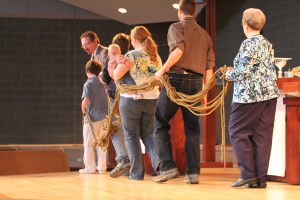
In the second primary image of the sermon, the same five volunteers/generations change their activity and therefore the way we think about passing on the faith. I talk about mountain climbing, but we also do it together, the physical activity evoking the source in a tangible way. The rudiments of the source domain are present: travelers, dangerous landscape, caribiners, a rope, a direction, movement along a path, etc.
Map to the Target
Explicit mapping to the target is limited in the second image just as in the first. At this turn of the sermon, we have made an important change “behind the scenes,” as it were: we have moved from ABSTRACT CONCEPTS ARE PHYSICAL OBJECTS to LIFE IS A JOURNEY.
Both are a part of our culturally-shaped conceptual system and both will tend to go unnoticed, but they shape our inferences in profoundly different ways. You don’t do or expect the same kinds of things on a journey as you do when you are manipulating a physical object. The differences between these two conceptual systems are the heart of the dynamics of the sermon.
See Through a New Lens
Different inferences about how faith relationships work are presented in medias res; while the generations walk around together, I point out different aspects of the source domain that help us reason about the target. The strong inference of this domain is that we need each other—the journey of faith is intended to be communal. This move gives us a different way of imagining the rather isolating task of “passing on” the physical object of “the faith.”
One of the most important changes in how we view the task of faith formation comes in how we view each other. In the physical object/baton domain, the “passing on” only happens in one direction, with very defined roles, in a very limited time frame.
Within the mountain climbing domain, however, the generations are asked to identify one another as people who depend on us, but also people on whom we depend. The passing on of faith becomes mutual dependence. And the timeframe is expanded from a moment of transition to a lifetime of journeying.
The caribiner and the rope give us a way to keep the individual aspect of the faith (each person is individually connected to the rope) and also keep the communal aspect (being individually connected to the rope means by definition being connected to other people on the rope.) The natural inferences of being on the rope naturally fight the tendency toward isolation experienced in the lives of the congregation.
Conclusion
Returning to the text, we view the multi-generational faith Paul describes in a new way. Paul uses the domain of fire in the text; I briefly talk about fire from within the dynamics of the rest of the sermon.
I close the sermon with the admission that we didn’t really talk about concrete action items to change the way we pass on the faith. But I actually do believe that acting different comes from seeing yourself and your life in a new way. If we as a Church see our faith as a journey on which we are tied to other Christians (whether we like it or not), what kinds of actions will seem obvious or natural? Will we be able to get past the isolation that has crept into our experience of faith? This sermon intends to be not the end, but the beginning of discovering those kinds of answers.
Special thanks to Mr. Rick Darragh for shooting video, to the Washtenaw County Sheriff’s depart for use of climbing equipment, and to my Mother-in-law for the empty paper towel roll.
Editor’s note: We believe in a God who actually chose to take on human flesh–and culture–in order to save. This intersection of Gospel and culture has always been a bit of a touchy subject, but one which, by definition, can not be avoided. As Lesslie Newbigin puts it, “there is no such thing as a pure gospel if by that is meant something which is not embodied in a culture.”
First-time contributor Steve Wiechman and the team at CrossPoint, Katy, TX certainly take this truth to heart! Like Augustine, Chrysostom, Luther, Lewis, and a host of others before him, Wiechman is borrowing a theme from his culture and using it to view the witness of Scripture. Because the preacher is using one thing (Zombies) to talk about something else (our Sin and the gift of our Savior), it’s not surprising that the dynamics of metaphor theory help shape the dynamics of the sermon and the experience of the hearers. In the end, Wiechman is giving his hearers a new way to view a familiar topic. With this cultural lens he helps us see both our sin and our Savior in a new light.
Jesus isn’t only “The Master,” he’s also the master of the cultural metaphor for the sake of the gospel. But since there is a lack of mustard seeds, shepherds, Samaritans and vineyard owners in the west-Houston suburb of Katy, Texas where I have recently moved, the church I just joined decided that Jesus would not be beyond employing zombies as a cultural metaphor for the sake of the gospel.
For five weeks in Lent, CrossPoint Community Church did a series based out of the Gospel of Luke entitled CrossPoint vs. Zombies. To be honest, I didn’t know a thing about zombies or zombie-genre before this. But did you know that the number one television show for the past two years is “The Walking Dead” on AMC? I had no idea!
CrossPoint vs. Zombies was a very provocative series, as you can imagine; it caused great consternation for many regular, church-going types (like my own family)! We do not share the same fascination with our neighbors of watching zombies tear off arms and eat the flesh of living people (especially while eating our lunch!), much less the morbid, nihilistic plot-lines that are devoid of hope.
But because the people around us are shepherds,—um, I mean, zombie-lovers,— we thought appropriating this cultural metaphor for the sake of the gospel is the kind of thing Jesus would have done. Little did I know that Jesus wanted to give me, a former zombie, a new and deeper appreciation for one of His most amazing and mysterious gifts – His Supper.
The following video is a sermon from the second week of the CrossPoint vs. Zombies series. At the beginning is a portion of the theme verse of our series from Ephesians 2:
And you weredead in the trespasses and sins2 in which you once walked, following the course of this world, followingthe prince of the power of the air, the spirit that is now at work inthe sons of disobedience—3 among whom we all once lived inthe passions of our flesh, carrying out the desires of the bodyand the mind, andwere by naturechildren of wrath, like the rest of mankind.4 ButGod, beingrich in mercy,because of the great love with which he loved us,5 evenwhen we were dead in our trespasses,made us alive together with Christ—by grace you have been saved— (ESV)
The ESV’s more literal translation of peripateo, or “walking around” dead, was our main law metaphor move. This fits perfectly with the Biblical understanding of original sin and total depravity coram Deo.
It also set us up for moving through the season of Lent with a focus on repentance and dying to ourselves, while drawing closer to the death and resurrection of Jesus as our only salvation from the zombie-lives we live, at least according to Paul’s letter to the church in Ephesus.
This particular sermon has three main moves:
Revisit where we started in week one – zombie culture and how to kill a zombie
Focus in on the specific metaphor “zombies have an insatiable appetite for flesh”
Gospel move – Jesus, understanding our insatiable appetite for sin and flesh, willingly gives us His flesh to undead us
Check out the video and then we’ll talk a little more about how metaphor theory showed up in the sermon to take a very contemporary cultural theme and employ it in the service of an eternal promise of God in Jesus Christ.
Maybe you loved this sermon and thought the zombie hook was exactly what this culture needs to connect it in a real way to the very foreign concept of sacrament; some thought that. Maybe you thought this sermon was too far afield to speak to you effectively; some thought that, too. But either way, notice how the basic dynamics of metaphor theory helped shape the way this sermon brought a first-century moment (which, by the way, recapitulated an event some 2,000 years prior) into a cultural context some 2,000 years removed.
So as not to get lost in the metaphor, I will not deal with the introduction of the sermon which revisits the first week of the series and establishes that zombies are actually “real,” Biblically speaking. All that is going on here is establishing a connection between zombie-culture and the Biblical understanding that we can walk around dead. Theologically speaking, we are dealing with original sin and total depravity. However, to stick with the main metaphor for this sermon, we will skip this first part, which lasts from the beginning to the 6:12 mark.
Evoke the Source Domain
Beginning at 6:12 [this section runs from 6:12-8:47], I start to evoke the source of zombies and their insatiable hunger for human flesh. I begin by referencing the most popular television show for two years running, The Walking Dead. In doing so, I open up a culturally-packed metaphor that will have a lot of meaning for some people already, and virtually none for others. For those who don’t have any zombie-IQ (like myself), I identify parts of the source domain relevant for this week’s message: insatiable appetite, disgusting eating habits, and an innate hunger that drives them to do only one thing – eat humans.
Map to the Target Domain (in the World of the Text)
At the 8:47 mark [8:47-11:37], I begin to map the source of “zombies’ insatiable hunger for human flesh” to the target of the disciples in the upper room for the Passover with Jesus. You’ll notice that I carry over zombie-language into the sharing of Luke’s account of the institution of the Lord’s Supper.
Two things are at work here already: the bookends to the Supper of Judas seeking to devour Jesus on his own terms, and the disciples seeking to devour each other as they debate who is the greatest; and the eating of the Passover, which becomes the eating of the Lord’s Supper. In the context of “zombies’ insatiable hunger,” we now have disciples devouring each other, and a supper that followers of Jesus have celebrated to this day with holy reverence.
A lot of this I’m just allowing to stew, without any explicit mapping. The main connection I make at this point is that the disciples are being zombies – devouring each other.
It’s at this point that I begin to map the source of “zombies’ insatiable hunger” to the lives of the hearers. The first move [11:47-12:07] I make is for the regular church-goer and the already-Lutheran, as I share the historic confession of the church, “I am by nature sinful and unclean.”
This confession is a confession of a zombie – a walking-dead person. I don’t explore this at all. I just allow this very familiar phrase for the already-initiated to sit in the context of flesh-eating zombies and disciples devouring each other at the institution of the Lord’s Supper. You can not like zombies or zombie-genre, but you can’t escape that the Church has historically seen itself in this way.
Map to the Target Domain (in the World of the Hearers)
I quickly move on to mapping the source [12:07-13:07] to all the hearers at a very practical, every-day level as I map the “disgusting” nature of zombie hunger to their lives. In a very bold attack (like you might see in a zombie movie), I expose sexual lust and pornography, emotional and physical codependence, workplace competition, and social-media assaults as evidence of our zombie-living and insatiable hunger to devour each other. Notice the inferences about sin that are uniquely highlighted in this metaphor: our sin is repulsive, disgusting!
Now it is time to drive the metaphor toward the hearers’ relationship with God. To do this, I return to Judas, and how our appetite for sin will drive us to want to consume even Jesus on our own terms, just as he did. This brings us to the height of the plot of the sermon – we are walking dead, we devour each other, and we will not change – so, what are we to do?
Zombie-genre is marked by nihilism – the belief that things will not get better, but worse; the lack of all hope; utter despair. In contrast, I interject the miracle of the Lord’s Supper [at 14:00], just as Luke does in his record of it in his gospel account – right between the zombie attacks of Judas and the disciples.
And what is even more beautiful about this miracle, is that it is a meal! At the 15:25 mark I make the main move of the message, that Jesus offers his flesh and blood willingly to the walking dead. But this raises a very difficult question: “Why?”
The rest of the message deals with this question, and the main answer flows from the metaphor that has guided us all along – if we aren’t devouring Jesus (on His terms), we will devour each other. Only Jesus’ body and blood, given on His own terms, will satisfy our insatiable hunger for sin and death, undeading us and making us alive to God and His kingdom and the people around us.
See Through A New Lens
I do not test the limits of the “zombies’ insatiable hunger” metaphor; instead I use the remaining time in the message to see my own depravity and hunger for sin, and the gift of Jesus’ body and blood in the Lord’s Supper through a new lens. I was amazed at how this new lens made me much more aware of my insatiable appetite to devour other people in all kinds of ways – especially those closest to me. In fact, we began to use the language of zombies around my house when we noticed our appetites for consuming each other.
At the same time, this zombie-image gave me a new and deeper appreciation for the Lord’s Supper. I have longed for and loved the Lord’s Supper for many years. But seeing it in this new way has enhanced my need and my hunger for what Jesus offers, while deepening the nature and depth of His gift. I don’t want to devour my friends and family; Jesus’ body and blood not only forgives, it keeps my zombie hunger in check. That changes the way I see communion!
The end of the sermon is a call to eat the free food that Jesus offers. Unfortunately, the church that I just joined was not celebrating the Lord’s Supper that day. However, I encouraged the hearers toward the Lord’s Supper the next weekend and the Wednesday following which would bookend a three-day fast. The fast took the metaphor of eating/devouring and put it in the context of the bodily experience of eating for the hearer. This physical experience actually served to create a real longing for the physical/spiritual Supper the next weekend.
I went into this sermon series a little apprehensive, but I discovered that the imagery of walking dead and devouring other people is actually Biblical! More than that, the Gospel of Jesus and His life-giving gift is enriched by viewing it through the lens of food and hunger: we feast on Jesus that we may not devour each other.
Who knew that zombie-genre could actually open my eyes to a deeper appreciation and understanding of this amazing and mysterious gift from Jesus? I hope you’re hungry. Bon appetite!
Steve Wiechman | Executive Pastor | CrossPoint Community Church | Katy, TX
 As I look out the back door to the lake, I am struck by the beauty of these summer days. The sun shines. The birds sing. The breeze breathes through the trees and hovers on the face of the waters.
 In terms of the Four Threads, the sermon began with Evangelical Proclamation: because I knew I wanted to preach the Gospel in terms of an Easter lily, I shaped the Textual Exposition, Theological Confession, and Hearer Interpretation accordingly. Of course, the Easter Lily connects directly to themes of death and resurrection, so it fits well with the theme for the day.
 Speaking of Jesus: The Art of NOT Evangelism isn’t intended to be a book on preaching. It’s a book about the primary ways we interact with people who don’t know Jesus.
 Don’t do it.
 As long as this metaphor of central/peripheral describes the importance of different theological formulations or expresses a desire to be centered (focused on) Jesus, sign me up: I am there.

 Moving beyond the basics, you probably also know that the same Source domain can be used in a variety of ways to map inferences and reasoning onto a variety of different Target domains: Richard can be a gorilla, but so can Susan, that linebacker over there, the stock market, metaphor theory, etc.
 This typological approach to the Old Testament is the opposite of a rectilinear understanding of prophesy, a theory that suggests there can be one and only one fulfillment to any promise.

 justinrossow.com